Showing posts with label the economy. Show all posts

Sunday, December 3, 2017

Weighing The Week Ahead: A Strong Market Outlook Gets Even Stronger

Image result for businessman with binoculars

 Includes: DDMDIADOGDXDEEHEPSEQLFEXFWDDHUSVIVV

Summary

The tax cut compromise will command attention in the week ahead.
Little, if any, of the effects are reflected in market prices.
The economic background is already strong, and will get stronger in the short run.
The impacts vary significantly by market sector and industry.
And most importantly, put your political opinions aside long enough to make some sound investment decisions.
The economic calendar is another big one, with an emphasis on the employment situation. Despite this, everyone will be scrambling to analyze the tax cut legislation. I expect many to be asking:
What do the tax cuts mean for financial markets?

Last Week Recap

In the last edition of WTWA I predicted that attention would turn to the tax cut debate, with little attention to the economic data. That was an accurate guess, as the story took many twists and turns. My forecast that the legislation would not pass was mistaken. This broke my long string of successful forecasts of decisions on policy matters.

The Story in One Chart

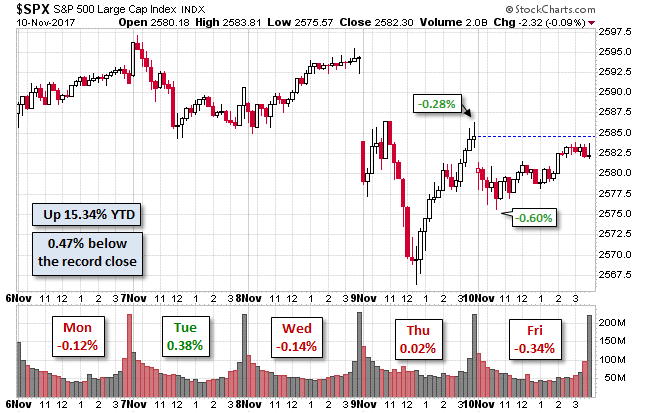
I always start my personal review of the week by looking at a great chart. Jill Mislinski’s weekly version is first-rate, pulling together several key points in a single look. She notes the highs and lows of the week, the nearness to the record high, the overall weekly change, and the intra-day excitement on Friday.
A close up of a mapDescription generated with very high confidence
The rest of the weekly post provides charts on drawdowns, volume, volatility and other key factors. Check it out. Meanwhile, let’s treat ourselves to an additional look at a long-term perspective.
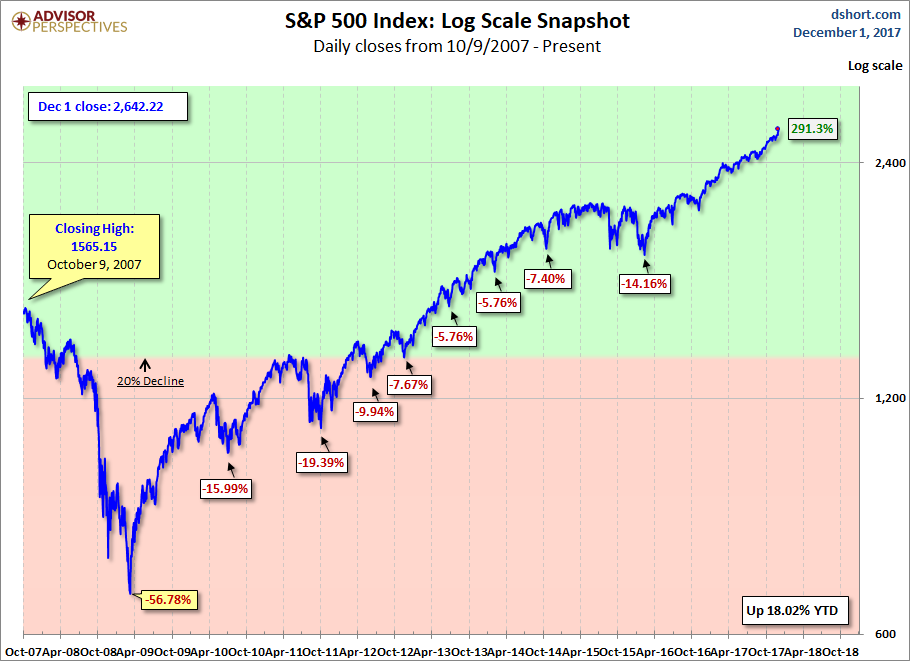
A close up of a mapDescription generated with very high confidence
The excellent chart design, using a vertical log scale, makes it easy to compare moves from different times.

Personal Note

I enjoyed my (LONG) week in San Diego, a beautiful place, especially as an escape from a Chicago winter. Competing with the top professionals from all over the world forces you to forget about your regular work – at least for a while. This week was a challenge, since the market news was so interesting. On an off day I went to the Midway museum. Several of the docents were former pilots, and their descriptions were great.
Here is a fact that is a bit counter-intuitive. After touching down in an area about the size of a tennis court, with speed right and the angle of attack correct for the tail hook to grab a cable, what is the first thing a pilot does? (Answer at the end).
By the way, those who believe there are no experts should try some competing in something! Buy this shirt here: https://teespring.com/new-year-2018-2055


Available in long sleeves, different styles and colors. 


The News

The economic news continues to beat (or nearly match) expectations on a wide array of measures. This is true even though the expectations are significantly higher than usual. Last week we had strong data on housing, auto sales, GDP revisions, the ISM index, and consumer confidence. Earnings expectations remain positive.
The Week Ahead
We would all like to know the direction of the market in advance. Good luck with that! Second best is planning what to look for and how to react.
The Calendar
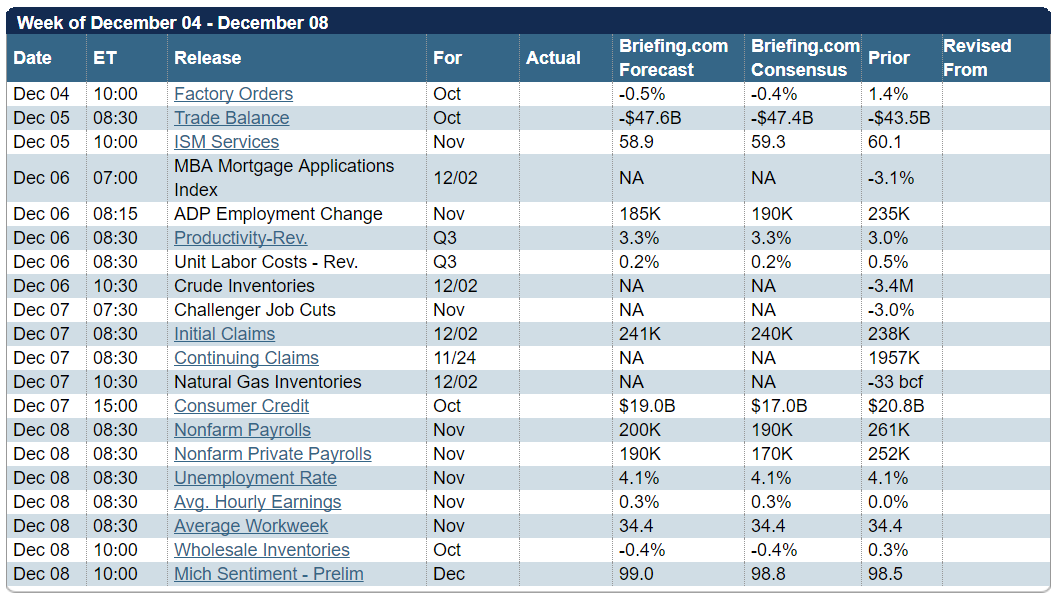
We have a big calendar with an emphasis on employment. The ADP report deserves attention as an independent measure with a good approach, but most will focus on Friday’s official data.
Briefing.com has a good U.S. economic calendar for the week (and many other good features which I monitor each day). Here are the main U.S. releases.
A screenshot of a cell phoneDescription generated with very high confidence
Next Week’s Theme
Despite the always-important employment news, financial media will emphasize the tax cut legislation, the likely result of the House/Senate Conference, and the implications for financial markets.
Please note! There is plenty of political commentary on this topic. The heated debate continues, and it is good fodder for financial bloggers and news media of all types. That is not my mission. We should accept the reality of the new policy and think about our best investments.
I was not alone in my surprise at the Senate success in passing a tax cut bill. This will be a great case study for students of Congressional politics – a classic example of how to build a coalition. The concessions to individual Senators, leading to hand-written changes in the bill, were classic. The big surprise was getting the deficit hawks on board. The tax cut argument has always been that lower taxes will pay for themselves through economic stimulus. CBO rules do not allow “dynamic scoring,” so these possible effects are not considered. Congress’s own Joint Committee on Taxation concluded that the bill would add $1 trillion to the deficit, even allowing for growth.
The innovative compromise dodged the economic debate. Basically, the decision was to try the cuts, but increase taxes if growth did not respond enough. I was mistaken in my belief that the deficit hawks would stand firm. Only Bob Corker did so. But our focus should turn from how the coalition was assembled to what it means for financial markets. What should we expect?
The Wall Street Journal has a good analysis of the differences in the House and Senate versions, which must be resolved in a Reconciliation Committee.
A screenshot of a cell phoneDescription generated with very high confidence
There are several different effects to analyze:
  • General stimulus – the sort expected from any kind of tax reduction. This effect varies with the marginal propensity to consume of those getting lower taxes.
  • Business stimulus – full expensing of investments and lower corporate rates. This should encourage willingness for multi-national companies to take profits in the U.S. We should also expect higher revenues for the targets of business investments. Technology names are an obvious target.
  • Higher corporate profits. Early estimates suggest that S&P 500 earnings could get an additional 10% boost.
  • Specific “sweetener” provisions. Those benefitting from more oil drilling in Alaska are one example. The search will be on for others.
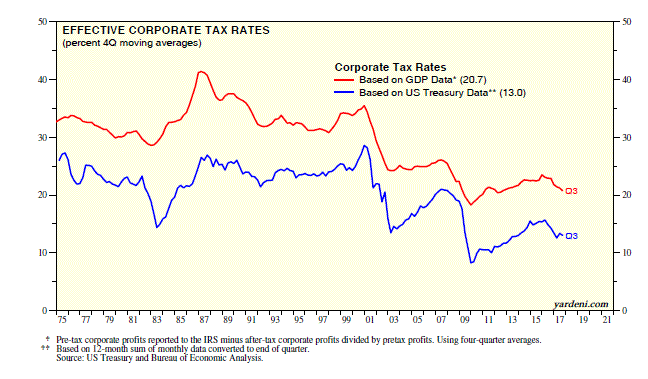
  • Specific sector effects. The WSJ has a summary that provides a good starting point for re-evaluating specific sectors and industries. Financial firms are expected to be big winners. Traditional energy will benefit from increased economic activity. Renewable energy will suffer from lost tax incentives. Hospitals will have more unpaid bills from those who are no longer insured. Ed Yardeni notes that most companies already have effective tax rates below 20%, so the key is to find those that will actually get a reduction.
A close up of a mapDescription generated with very high confidence
As usual, I’ll have more in the Final Thought, where I always emphasize my own conclusions.
Quant Corner
We follow some regular featured sources and the best other quant news from the week.
Risk Analysis
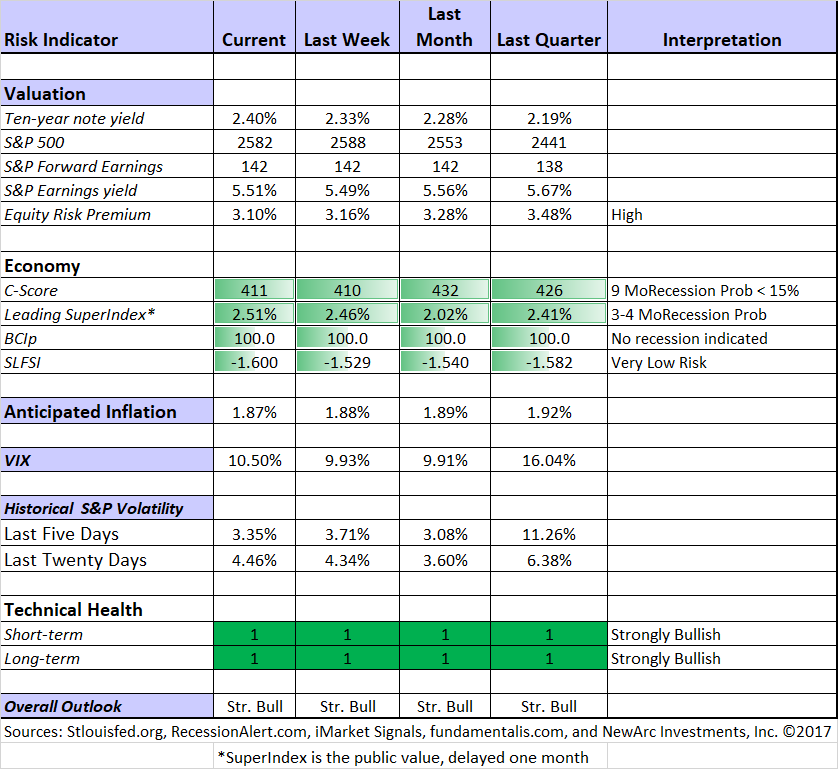
I have a rule for my investment clients. Think first about your risk. Only then should you consider possible rewards. I monitor many quantitative reports and highlight the best methods in this weekly update.
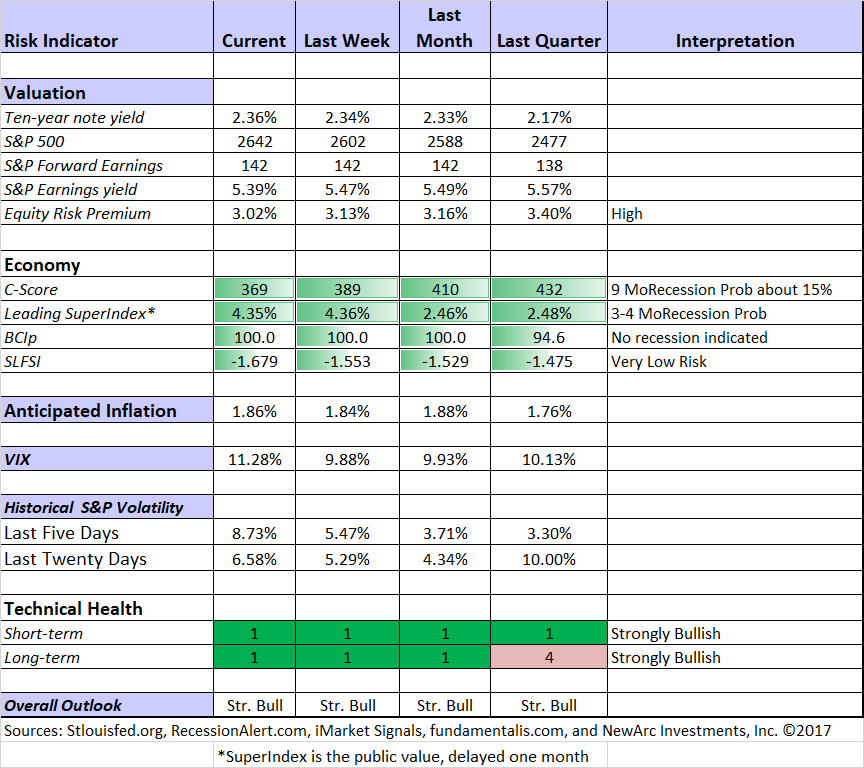
The Indicator Snapshot
A screenshot of a cell phoneDescription generated with very high confidence
Recession odds remain low and many economic indicators are improving.
The Featured Sources:
Bob Dieli: Business cycle analysis via the “C Score.
RecessionAlert: Strong quantitative indicators for both economic and market analysis.
Brian Gilmartin: All things earnings, for the overall market as well as many individual companies.
Georg Vrba: Business cycle indicator and market timing tools.
Doug Short: Regular updating of an array of indicators. Great charts and analysis. Let’s take another look at the regular update (via Jill Mislinski) of the Big Four indicators most influential in recession dating. The recent strength in these indicators is clear from the chart.
Guest Source
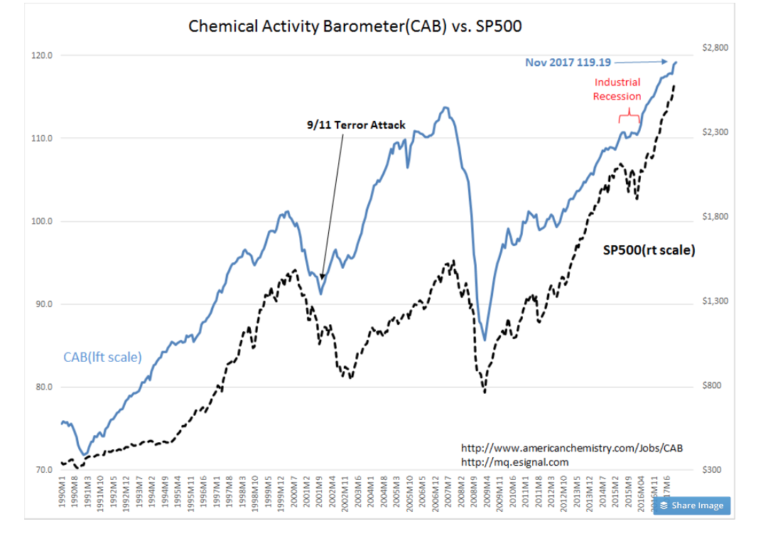
Davidson (via Todd Sullivan) continues his record of strong market analysis. His unique valuation approach considers both interest rate spreads and the Chemical Activity Barometer as an economic proxy.
The Dallas Fed reported its inflation measure, the 12mo Trimmed Mean PCE, at 1.60%. Inflation has fallen steadily from 1.94% reported in Jan 2017. Falling inflation is the result of a slower pace of discretionary government spending as noted in my earlier commentary on the differences in Real GDP vs. Real Private GDP. The lower the inflation the more valuable earnings become. Investors bolstered market prices in 2000 on the belief that Internet companies would nearly eliminate inflation and the SP500 saw a P/E over 35 briefly. The SP500 Value Investor Index was priced less than 50% of the SP500 levels (SP500 priced more than 100% of the Value Investor Index).
Today the SP500 is only priced a modest 15% higher than the SP500 Value Investor Index and facing an acceleration of global economic activity. Decently higher corporate earnings remain ahead in my opinion based on labor demand indicators and rising Chemical Activity Barometer(CAB).
A close up of a mapDescription generated with very high confidence
Insight for Traders
Our discussion of trading ideas has moved to the weekly Stock Exchange post. The coverage is bigger and better than ever. We combine links to trading articles, topical themes, and ideas from our trading models. This week’s postcovers the interesting and profitable approach of finding contrarian trades. Model performance updates are published, and of course, there are updated ratings lists for Felix and Oscar, this week featuring the Russell 1000. Blue Harbinger has taken the lead role on this post, using information from me and from the models. He is doing a great job.
Insight for Investors
Sorry that I cannot update links this week. I hope we’ll get some suggestions in the comments. We will all have plenty of work to do in the week ahead.
Final Thoughts
My expectation is that stocks will continue to track the improvement in earnings expectations. If the 10% earnings boost is accurate, that is how much we might expect stocks to increase. Current levels are about 18.3 times forward earnings. This multiple is normal when interest rates (ten-year note) are below 4%.
One key question is timing. If corporate rates are not cut until 2019, the economic effect will be more gradual. Last week’s trading included some “trading” moves on the Washington news. It seems to confirm the conclusion that little if any of the current market valuation is based on the new tax policy.
I realize that many are pleased and many displeased by the tax changes. The opinions are strongly held. Neither anger nor glee will help your investment returns.
What worries me:
  • Putting off a serious solution on government debt.
  • The concept of raising taxes when the economy weakens and revenues decline. (Real Time Economics).
And what doesn’t:
  • Mueller investigation. At least not yet.
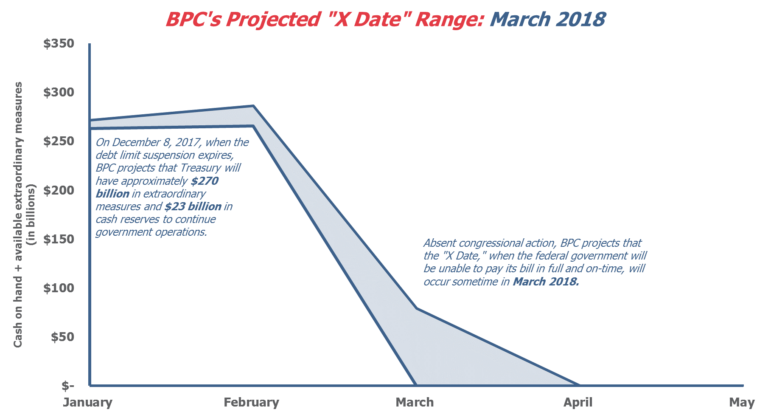
  • The debt ceiling deadline. With “extraordinary measures” the Bipartisan Policy Center now has the real deadline in the March-April timeframe. This is a poor method for addressing a real problem.
A screenshot of a mapDescription generated with very high confidence
Answer to aircraft carrier problem: Unlike a commercial landing, the carrier pilot goes to full throttle right at touch down. Depending upon conditions, 8 – 15% of landings do not catch the tail hook, even when the approach is accurate. The pilot would not know that the hook missed until it was too late. The system of winches plays out cable and are strong enough to stop the plane, even at full thrust. They call it an arrested landing!
Disclosure: I/we have no positions in any stocks mentioned, and no plans to initiate any positions within the next 72 hours.
By Jeff Miller

Friday, December 1, 2017

Wall Street Breakfast: Tax Concerns Weigh On Stock Futures

Image result for wall street breakfast

Includes: AAPLABCAMZNAPRNASMLCAHDISGMINTCLYFT

U.S. stock index futures are pulling back from the Wall Street highs seen in the previous session as the Senate tax bill ran into significant hurdles. With concerns over the deficit, it's now possible that deep tax cuts might have to be moderated, future tax increases might be built in and that some conservatives might seek to attach spending cuts. A Senate vote has now been delayed, and it's not clear if it will even take place today.
Economy
The breakthrough in Brexit talks that Theresa May has been working to clinch next week is at risk after Northern Ireland's Democratic Unionists made it clear they were in no mood to compromise over the Irish border. Other big news from Britain... RBS is closing more than a quarter of its branches across the U.K., or 259 locations, as the bank encourages customers to use its online services.
November was the best month for eurozone factories in over 17 years. IHS Markit's final manufacturing PMI for the bloc climbed to 60.1 last month from October's 58.5. Suggesting the expansion will continue through December, new orders soared, backlogs surged and headcount increased at the fastest rate since the survey began in 1997.
Seeking to forge a new government, German Chancellor Angela Merkel has held her first meeting with the Social Democrats, while the business world criticized the prolonged political deadlock. "Germany can afford many things, but not an unstable government," said VW Truck & Bus (OTCPK:VLKAY) CEO Andreas Renschler. The government should be ready to tackle future challenges "in a creative, bold and forceful way."
Greece plans to return to the international capital markets with a new seven-year bond issue early next year, after completing a €30B voluntary bond swap this week, FT reports. If market conditions are favorable, two more issues of three- and 10-year bonds would follow by July, ahead of Greece's expected exit from its bailout program next August.
On the third day of his trial, Halkbank executive Mehmet Hakan Atilla told a U.S. federal court that Turkish President Recep Tayyip Erdogan had authorized transactions to help Iran evade U.S. sanctions. Several methods to launder the money were carried out, like gold trades and fake food purchases, while his testimony could further strain relations between the two NATO allies.
The Hwasong-15 missile that North Korea launched on Wednesday is a new type of ICBM that can fly over 8,080 miles, a South Korean defense ministry spokesman told Reuters. South Korea's economy appears to be shaking off the tensions. Gross domestic product expanded at a 3.8% annualized rate in Q3, marking the fastest pace of growth in seven years.
Christmas Pillow Dark Red T-Shirt FrontA private survey that focuses on small and medium-sized firms in China showed that manufacturing activity picked up at a slower pace in November. The Caixin/Markit manufacturing PMI came in at 50.8, the lowest level in five months. The economy in Q4 is still likely to "maintain the stability observed since the start of the second half of the year," said Zhengsheng Zhong of CEBM Group, a subsidiary of Caixin.
Stocks
Lithium-ion revolution? Tesla's (NASDAQ:TSLA) Elon Musk has beat today's 100-day deadline to install the world's biggest battery in South Australia, which will supply power to 30,000 homes. But he'll probably have to relinquish that crown by February. Hyundai Electric & Energy Systems is building a 150-megawatt unit, 50% larger than Musk's, that will go live in about three months in Ulsan, South Korea.
With some bad blood spilled during the last few months, Toshiba (OTCPK:TOSYY) is close to settling a legal dispute with Western Digital (NYSE:WDC) that has threatened to become a major stumbling block in selling its $18B semiconductor unit. According to Bloomberg, the U.S. firm will drop its efforts to block the deal in exchange for an extension of their joint venture agreements.
ASML -2% premarket after Intel (NASDAQ:INTC) cut its stake in the Dutch semiconductor equipment supplier to below 5%. The U.S. company took a 15% stake in 2012 as part of a program to help build the next generation of smaller, faster chips. With ASML's new machines now entering commercial production, the investment program is winding down.
Bitcoin is hovering around the $9,900 level after tumbling about 15% from an all-time high hit this week in volatile cryptocurrency trade. In further signs of mainstream acceptance, however, bitcoin has gone to the Big Four. Accounting firm PricewaterhouseCoopers has accepted the first bitcoin payment for its advisory services.
According to Reuters, Nissan (OTCPK:NSANY) has begun international arbitration against India to seek more than $770M in a dispute over unpaid state incentives. There are currently over 20 similar cases pending against the nation, among the highest of any single country, brought by investors concerned about issues ranging from retrospective taxation to payment disputes.
Lyft saw an explosion of sales growth in the first half of the year, according to The Information. Revenue is estimated to have tripled from the year-ago period to $483M, while LYFT's net loss fell 27% to $206M. The company's strong revenue gains come at a time when larger rival UBER struggles with a series of scandals and setbacks.
General Motors thinks it can make billions of dollars building and operating a fleet of self-driving cars, taking on UBERLYFT and others. "This business is potentially bigger than our current core business," CFO Chuck Stevens told analysts yesterday. GM hopes to launch its autonomous robo-taxi fleets in big cities by 2019.
With six years of shrinking sales and a wave of maturities coming due in 2018, Sears (NASDAQ:SHLD) is seeing less big-box in its future. "Innovative smaller-format stores continue to showcase our company's unique integrated retail capabilities by combining new technology, our strongest categories and in-store experts," CFO Rob Riecker said on a pre-recorded conference call.
Amazon is in talks with generic drugmakers, including Mylan (NASDAQ:MYL) and Sandoz (NYSE:NVS), about a potential entry into the pharmacy space. The conversations are about making a role in drug purchasing, competing against distributors such as McKesson (NYSE:MCK), AmerisourceBergen (NYSE:ABC) and Cardinal Health (NYSE:CAH), but the plans remain vague, and some are skeptical Amazon (NASDAQ:AMZN) will pull the trigger.
Blue Apron +3% premarket after replacing CEO Matthew Salzberg with CFO Brad Dickerson, who joined the company from Under Armour (NYSE:UAA) in 2016. Salzberg is the second co-founder to leave following Blue Apron's (NYSE:APRN) stock market debut in June. The meal-kit maker is struggling to hold on to customers and reverse a precipitous drop in investor confidence.
Copyright infringement? Disney (NYSE:DIS) has filed a lawsuit against Redbox in an attempt to stop the DVD rental company from selling digital copies of its movies. Redbox is offering $7.99 to $14.99 per title because it doesn't have a distribution arrangement with the studio and buys retail copies of its discs to rent to customers that come with download codes.
Another battle... Qualcomm (NASDAQ:QCOM) has filed three new patent infringement complaints against Apple (NASDAQ:AAPL), saying there were 16 more of its patents that the company was using on its iPhone. It follows Apple's countersuit on Wednesday against Qualcomm, which alleged that Snapdragon mobile phone chips infringed on its patents.
Microsoft has elected four new members to its board of directors, bringing the total to 14, of which nine have been appointed since Satya Nadella became CEO in February 2014. He has already made a significant mark on the company, emphasizing its cloud products over the Windows franchise, and getting Microsoft (NASDAQ:MSFT) out of the smartphone business. Since Nadella took over, shares have soared more than 70%.
Today's Markets 
In Asia, Japan +0.4%. Hong Kong -0.4%. China flat. India -1%
In Europe, at midday, London -0.4%. Paris -0.9%. Frankfurt -1%
Futures at 6:20, Dow -0.3%. S&P -0.4%. Nasdaq -0.7%. Crude +0.6% to $57.76. Gold +0.2% to $1278.60. Bitcoin +0.3% to $9947. 
Ten-year Treasury Yield
Today's Economic Calendar
Companies reporting earnings today »

Sunday, November 12, 2017

Weighing The Week Ahead: Millennials And The Housing Rebound

Image result for businessman with binoculars

 Includes: DDMDIADOGDXDEEHEPSEQLFEXFWDDHUSVIVVIWL

Summary

Economic news remains solid with little recession risk.
Everything you should know about the JOLTS report.
This week features reports about the housing market.
The emerging Millennial market supports housing demand.
Updated worries, non-worries, and stock ideas.
The economic calendar includes many reports, but few of the most important. I expect the housing market to attract attention. There are several relevant releases on tap, and the sector is especially important. Some will take up a special slant, asking:
Will Millennial buyers extend the housing market rebound?

Last Week Recap

In the last edition of WTWA I mused on the confluence of records in the data and in stock market indexes. I suggested that some of the punditry would start worrying that things were “as good as it gets.” This was a topic for some, including David Templeton, who responded with a qualified “no,” but suggested the need to look beyond the mega cap stocks. Check out his reasoning and persuasive charts.

The Story in One Chart

I always start my personal review of the week by looking at this great chart from Doug Short via Jill Mislinski. She notes the loss of 0.21% on the week. Once again, it was a week of very low volatility; the intra-week range was only a touch more than 1%. Historically 1% moves are commonplace --- each day!
Doug has a special knack for pulling together all the relevant information. His charts save more than a thousand words! Read the entire post for several more charts providing long-term perspective, including the size and frequency of drawdowns.

The News

Each week I break down events into good and bad. For our purposes, “good” has two components. The news must be market friendly and better than expectations. I avoid using my personal preferences in evaluating news – and you should, too!
The economic news has been mostly positive, as summarized by New Deal Democrat’s helpful compilation of long, short, and coincident indicators. His conclusion is neutral on the long term and positive in shorter time frames.
The Good
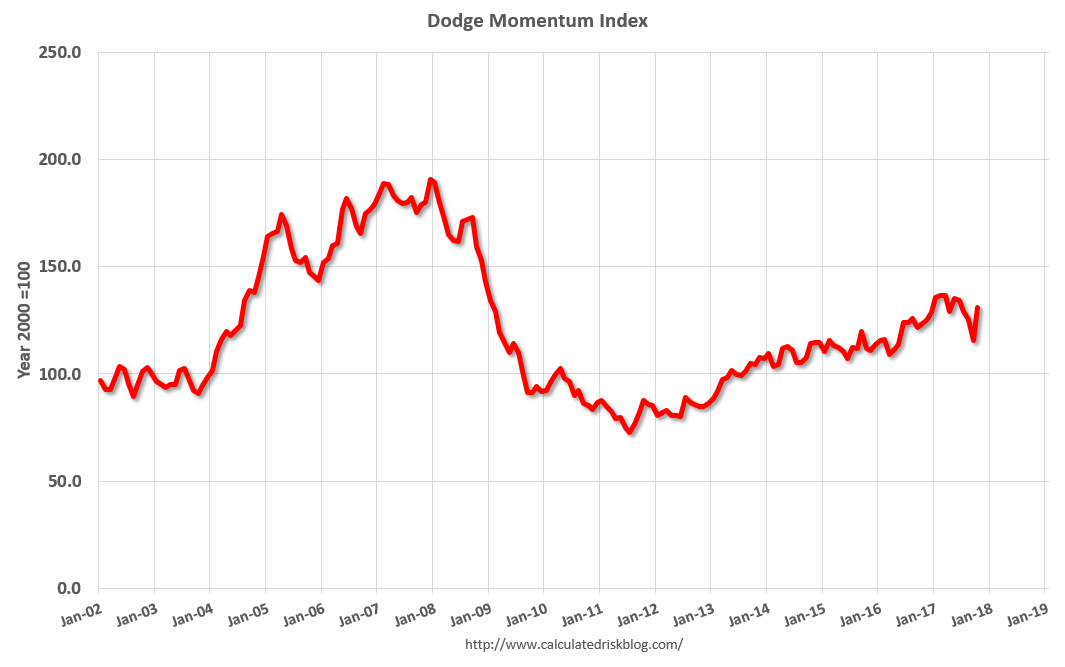
  • Leading index for commercial real estate improves. Calculated Risknotes that the Dodge Momentum Index rose 13.2% in October versus September. According to Dodge, this indicator leads non-residential construction spending by one year.
  • Household stock ownership is at the lowest level in almost twenty years. Chris Ciovacco uses Gallup data to refute the notion of a current, euphoric bubble.
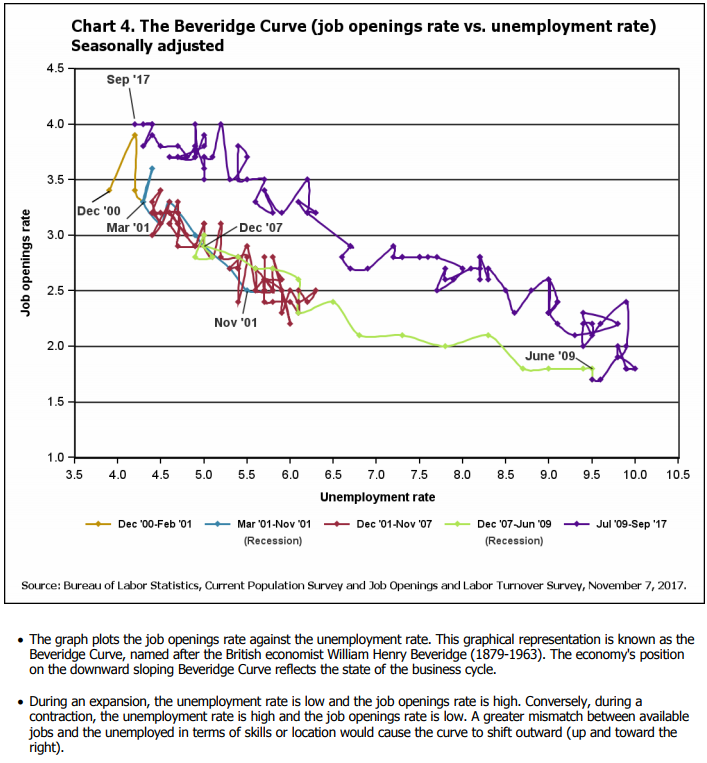
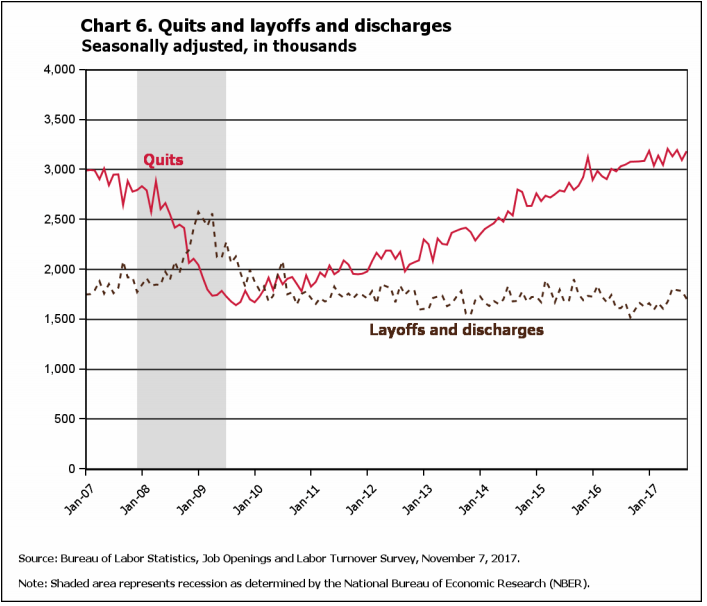
  • Job openings increased….and other good news from the JOLTS report. No one does a good job of analyzing this report. Many try to interpret it as a sign of employment growth, a purpose for which it was not designed. With fewer indicators to summarize this week, let me suggest the key things we should watch for.
    • Ratio of unemployed to job openings.
    • Beveridge curve – indicator of labor market structure.
    • Reason for job separations ---layoffs or voluntary. Layoffs get a lot of news. A high quit rate shows confidence on the part of employees.
The Bad
  • Jobless claims were 239K, 10K higher than last week, and worse than expectations.
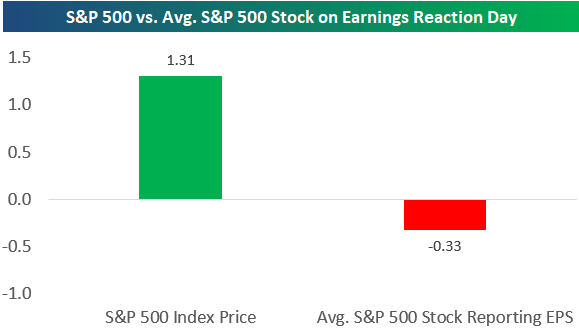
  • Response to earnings was weak. Bespoke reports that despite solid earnings, there is a divergence between the overall S&P and the average member stock.
  • Michigan sentiment dipped to 97.8 from last month’s 100.7 and expectations of 101.
  • Rail traffic weaker via Steven Hansen of GEI. He looks beyond the headline data to elements he has identified as more predictive. While still better than a year ago, the improvement is decelerating.
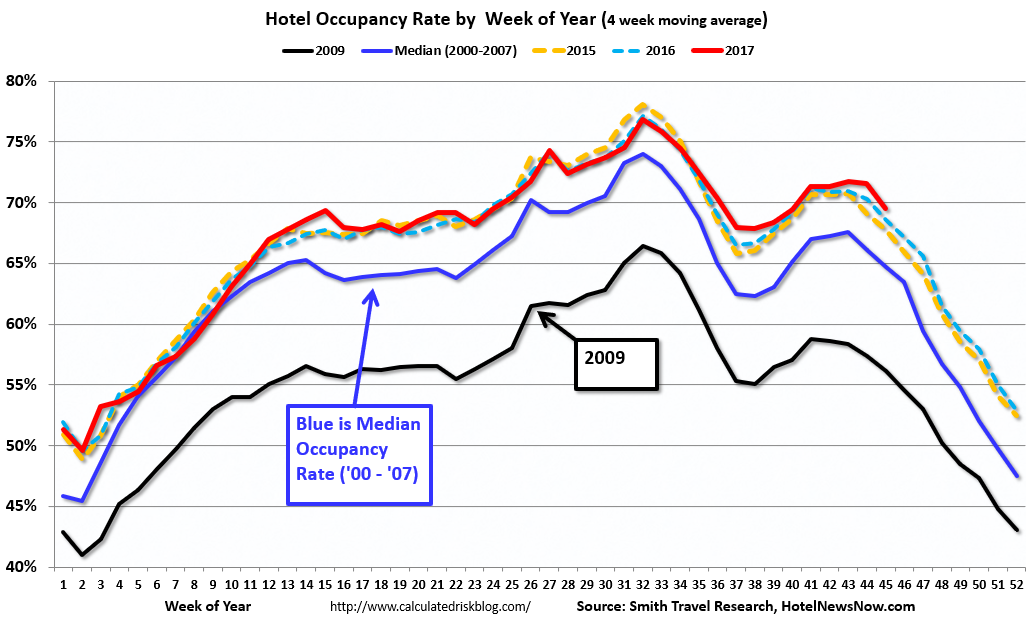
  • Hotel occupancy rate declined 0.9% last week. The rate remains ahead of the record-setting pace of 2015. (Calculated Risk)
The Ugly
Each week seems to bring another case of outlandish violence. While there are some common themes among the perpetrators, there is no consensus about solutions – or even whether to act. Opinions about the best policy reaction seem to depend more upon beliefs rather than facts. That is always a tough situation for public policy proposals.
Millennial Notes
My research always leads me to a few items that are interesting, but not necessarily relevant to the week ahead. One such item was a list of terms and expressions that Millennials would use, but older people would not. I had the inspiration to write a paragraph or two using these terms, in the Blazing Saddles tradition. Mentioning this to Mrs. OldProf, she informed me that this was one of my dumber ideas. She was right, of course. A quick look at another source showed that many terms from the first source are now (already?) retired.
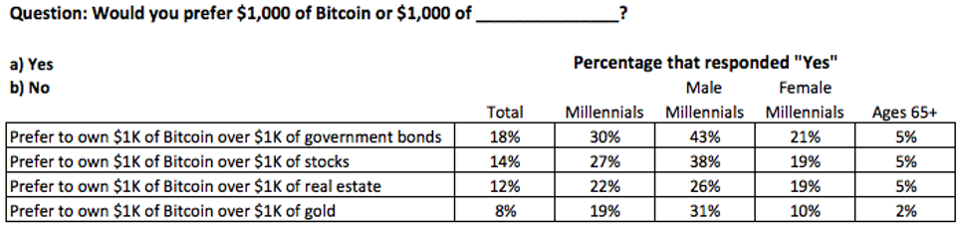
Millennials are far more likely to prefer bitcoin to stocks or bonds.
And this is despite their low ownership; only 4% have ever owned bitcoin.
The Week Ahead
We would all like to know the direction of the market in advance. Good luck with that! Second best is planning what to look for and how to react.
The Calendar
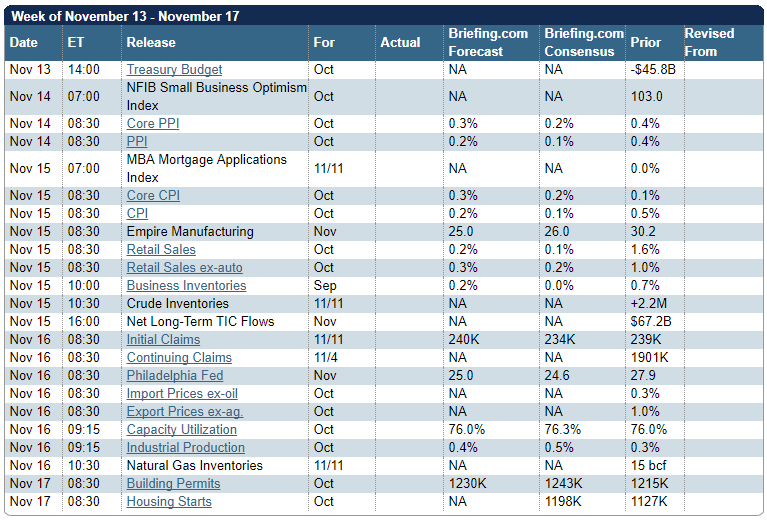
We have a normal calendar. The inflation data is edging up to a level where it will attract more interest. Retail sales is always an important report, as is industrial production.
That said, I see the Friday reports on housing as the most significant news. Building permits are an important leading indicator. That data series and new housing starts are volatile series. That makes them a challenge to interpret, but no less important.
Briefing.com has a good U.S. economic calendar for the week (and many other good features which I monitor each day). Here are the main U.S. releases.
Next Week’s Theme
The calendar is a busy one, but not one to suggest important surprises. If inflation picks up, that will attract more analysis of the business cycle and the Fed. With several housing reports on tap, that may well be the focus of attention. So far, the recovery has been led by consumer spending, with little help from business investment or housing. If the rebound is to continue, more sources of growth are needed. The answer may come from the changing U.S. demographics, leading people to ask:
Can Millennials provide the push for an extended housing rally?
Here are some perspectives, in my customary bearish to bullish range.
  • Get ready to revisit the housing bubble! (The IMF – a partial warning; Jesse Colombo, who sees many, many bubbles; and 58% of homeownersthemselves)
  • Housing growth is stalled by several headwinds
    • High prices (contra-Calculated Risk)
    • Rising mortgage rates
    • More rigor in loan requirements
    • Lack of supply (Zillow)
    • Down payments a challenge for new buyers
    • Tax proposal killing the mortgage interest deduction (By the Numbers)
  • The numbers do not lie
    • Now the largest group of home-buyers (Washington Federal)
    • Factors sparking the decision to buy a home (few readers will guess the most frequent – answer at the end of today’s post)
As usual, I’ll have more in the Final Thought, where I always emphasize my own conclusions.
Quant Corner
We follow some regular featured sources and the best other quant news from the week.
Risk Analysis
I have a rule for my investment clients. Think first about your risk. Only then should you consider possible rewards. I monitor many quantitative reports and highlight the best methods in this weekly update.
The Indicator Snapshot
The Featured Sources:
Bob Dieli: Business cycle analysis via the “C Score.
RecessionAlert: Strong quantitative indicators for both economic and market analysis.
Brian Gilmartin: All things earnings, for the overall market as well as many individual companies.
Georg Vrba: Business cycle indicator and market timing tools.
Doug Short: Regular updating of an array of indicators. Great charts and analysis.
Guest Source:
The BLS. Most observers engage in plenty of discussion about the initial release of employment data. Why? It is an important topic, so people grab on anything, ignoring the problems in short-term measurement. Each quarter the BLS releases a new installment of the Business Dynamics series. Because this uses state employment data, reviewed and aggregated for this purpose, it is much more accurate than the monthly estimates. In fact, it makes sense to review the various estimates using this result as the “right answer.”
For Q1 2017 the net increase in private jobs was 654K. The sum of the initial monthly reports on employment Friday was 553K. The actual difference would have been a major source of debate if known at the time.
Also worth noting is the massive change – much more important than the net result. 7.3 million jobs were created. And of course, 6.7 million were lost. Opening establishments accounted for 1.3 million new jobs, something that the birth/death adjustment truthers should study.
It also demonstrates that many more people are touched by unemployment than the official rate indicates. No wonder economic perceptions are often worse than the data seem to show.
Insight for Traders
We have not quit our discussion of trading ideas. The weekly Stock Exchange column is bigger and better than ever. We combine links to trading articles, topical themes, and ideas from our trading models. This week’s post continues our discussion of the strength of combining different trading approaches – a blended approach. To illustrate, we provided some historical data on the trading models. And of course, there are updated ratings lists for Felix and Oscar, this week featuring small caps. Blue Harbinger has taken the lead role on this post, using information from me and from the models. He is doing a great job.
Insight for Investors
Investors should have a long-term horizon. They can often exploit trading volatility!
Best of the Week
If I had to pick a single most important source for investors to read this week it would be Brett Steenbarger’s analysis of Frustration, part of his trading psychology series. While I most frequently cite Dr. Brett when we specifically deal with a trading theme, there is often an overlap with investor decision making. This is such a case. Investors with a sound overall approach can become frustrated at a stretch of losses or concern about reaching their goals.
…frustration is a great example of the principle that strengths, taken to an extreme, can become vulnerabilities. When we are achievement oriented and demanding of ourselves, having something get in our way breeds a natural frustration. That frustration, in turn, triggers a fight/flight state and suddenly we are no longer nicely grounded in our brain's prefrontal cortex. Instead, we activate motor areas to cope with the situation and act in ways that we would never entertain if we were calm and focused at the start of the trading day.
This often describes the behavior of individual investors, especially those who constantly chase what worked last month or last year. Polling from Pew Research shows that many share this sentiment.
[Investors feeling frustration might find helpful my paper on Investor Pitfalls. If your frustration relates to missing the rally and/or being behind on your retirement program, I have another piece on how to edge your way back into the market. Both are available for free from main at newarc dot com].
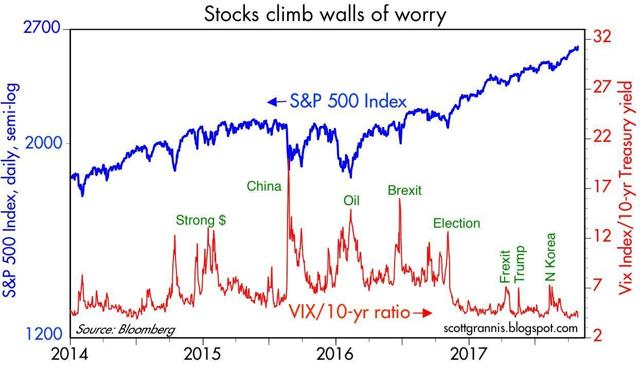
Scott Grannis shows how the perceived problems have actually provided fuel for the stock rally.
Stock Ideas
“Doghouse stocks?” Ray Merola is reviewing some recent occupants. In this post he is analyzing Celgene (CELG). He takes note of the high risk in trials and the disappointing sales of a key product. He concludes that the market has over-reacted. This is a data-driven analysis worth reading.
Starbucks or Facebook? Peter F. Way’s unique approach to risk/reward suggests Facebook. Check it out.
Brian Gilmartin shows what’s hot and what’s not in corporate earnings trends. Energy rolling, and financials depressed. Which is the opportunity?
Homebuilders “hammered” by the tax plan?
Interested in Speculation?
Brad Thomas looks at Puerto Rican debt via DDR Corp. (DDR)
Or Contrarian Choices?
Here are the six most shorted Nasdaq stocks.
Personal Finance
Seeking Alpha Senior Editor Gil Weinreich has an interesting topic every day. While his series’ theme emphasizes financial advisors, the topics are usually of more general interest. His own commentary adds insight and ties together key current articles. It is a valuable daily read. My favorite this week discusses the possible value of an annuity in your retirement plan. He cites an article by Dick Cotton, showing how the annuity can provide a foundation for other, more aggressive investments.
This is a great example of Gil’s series expanding horizons for many advisors.
Alan Steel (HNW Magazine) shares his customary wisdom with a discussion of current exaggerated pessimism, something that many seem to ignore. Here is his analysis:
Some folks are calling it a secular bull that is both old and decrepit, and busily sunning itself through its golden years from the light of a few big stocks as it has done since about March 2009.
Others consider the market crashes within that eight year (PLUS) period, like the 21.6% S&P 500 drop from May to October 2011, and the recession-level peak-to-trough numbers in the US, Japan, China, and emerging markets (amongst others) from mid-2015 to early 2016 (details here), put the age of this bull at somewhere around 4.5 years, or perhaps just a year and a half.
Then there are the gloomier folks who, despite the long-term upward trend, positive corporate earnings, basement level inflation, low unemployment, respectable jobs growth, and historically low interest rates, habitually pick at the scabs of negative investor sentiment and draw dotted lines between now and the ghosts of recessions past.
These apostles of Joe Granville have helped position that latter category as the people’s choice.
As such, independent investor sentiment levels about the stock market are about as euphoric right now as a stomach ulcer.
He goes on to cite the Gallup data I noted above, before concluding:
For me, I think the majority of investors are doing what they always do – waiting around for some kind of wonderfully perfect moment that will finally have built up enough financially fibrous scar tissue to replace the skin torn away by events like 2008/09, 2000/02, and even (for the oldies) way back to 1987 and its less memorable ilk.
Unfortunately, market nirvana is almost always either a day away or the day we missed.
So, when it comes to investing, perfect is always the enemy of good.
Abnormal Returns is always interesting, but the Wednesday edition is especially geared to individual investors. My favorite this week takes up specific steps that investors might follow to “improve our behavior.” These are great ideas, but my sense is the choice of “hire a coach” might be the only real winner for most people.
Watch out for….
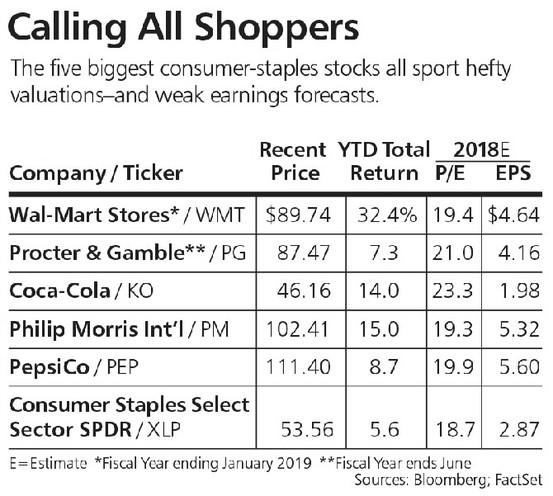
Consumer staples stocks. Barron’s notes that the sector might not be as safe as most think. (I agree). The full article provides a complete analysis, but here is a helpful summary.
Image result for walmart
Tupperware (TUP). Simply Safe Dividends looks at the sustainability of the dividend.
Stocks attracting the rare Wall Street “sell” rating.
Final Thoughts
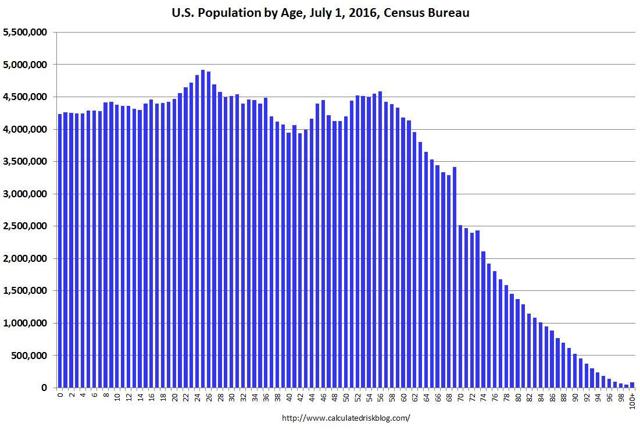
Taking advantage of demographic trends is an important way to improve your investment results. The growing economic significance of Gen Y is obvious. The change in the housing market is an important example.
Housing àEconomic Growth à Stronger Stocks
Strength in housing ripples through many other parts of the economy, including materials, employment, construction, and transportation. (Ritholtz). I have recommended home building stocks many times over the last year, and it has worked out well.
The “bubble” skeptics seem to reason that if sales or prices reach a former peak, that should be a warning. This simplistic approach would never recognize an overall positive trend in anything!
Here is a look at the 2018 Housing forecasts (Calculated Risk).
What worries me…
  • The debt limit is now on our radar. It is time to see some progress on this issue.
  • Trade issues. While there were no accidents on the Asian trip, there are also no indications of policy progress. The I wish the President had more willingness to use expert advice. The advantage of free trade is probably the most widely shared conclusion of economic experts.
…and what doesn’t
  • Stalled tax reform. The current plans are very unlikely to get enough votes within the Republican party alone. Taking more time and gaining some bipartisan support will not happen until next year, but the result will be stronger.
  • The economy. Our indicators show little risk and there is plenty of upside.
Surprising answer to a key reason for Millennial home buying: Dogs.
Disclosure: I am/we are long CELG.
By Jeff Miller