Showing posts with label business news. Show all posts

Friday, December 1, 2017

Wall Street Breakfast: Tax Concerns Weigh On Stock Futures

Image result for wall street breakfast

Includes: AAPLABCAMZNAPRNASMLCAHDISGMINTCLYFT

U.S. stock index futures are pulling back from the Wall Street highs seen in the previous session as the Senate tax bill ran into significant hurdles. With concerns over the deficit, it's now possible that deep tax cuts might have to be moderated, future tax increases might be built in and that some conservatives might seek to attach spending cuts. A Senate vote has now been delayed, and it's not clear if it will even take place today.
Economy
The breakthrough in Brexit talks that Theresa May has been working to clinch next week is at risk after Northern Ireland's Democratic Unionists made it clear they were in no mood to compromise over the Irish border. Other big news from Britain... RBS is closing more than a quarter of its branches across the U.K., or 259 locations, as the bank encourages customers to use its online services.
November was the best month for eurozone factories in over 17 years. IHS Markit's final manufacturing PMI for the bloc climbed to 60.1 last month from October's 58.5. Suggesting the expansion will continue through December, new orders soared, backlogs surged and headcount increased at the fastest rate since the survey began in 1997.
Seeking to forge a new government, German Chancellor Angela Merkel has held her first meeting with the Social Democrats, while the business world criticized the prolonged political deadlock. "Germany can afford many things, but not an unstable government," said VW Truck & Bus (OTCPK:VLKAY) CEO Andreas Renschler. The government should be ready to tackle future challenges "in a creative, bold and forceful way."
Greece plans to return to the international capital markets with a new seven-year bond issue early next year, after completing a €30B voluntary bond swap this week, FT reports. If market conditions are favorable, two more issues of three- and 10-year bonds would follow by July, ahead of Greece's expected exit from its bailout program next August.
On the third day of his trial, Halkbank executive Mehmet Hakan Atilla told a U.S. federal court that Turkish President Recep Tayyip Erdogan had authorized transactions to help Iran evade U.S. sanctions. Several methods to launder the money were carried out, like gold trades and fake food purchases, while his testimony could further strain relations between the two NATO allies.
The Hwasong-15 missile that North Korea launched on Wednesday is a new type of ICBM that can fly over 8,080 miles, a South Korean defense ministry spokesman told Reuters. South Korea's economy appears to be shaking off the tensions. Gross domestic product expanded at a 3.8% annualized rate in Q3, marking the fastest pace of growth in seven years.
Christmas Pillow Dark Red T-Shirt FrontA private survey that focuses on small and medium-sized firms in China showed that manufacturing activity picked up at a slower pace in November. The Caixin/Markit manufacturing PMI came in at 50.8, the lowest level in five months. The economy in Q4 is still likely to "maintain the stability observed since the start of the second half of the year," said Zhengsheng Zhong of CEBM Group, a subsidiary of Caixin.
Stocks
Lithium-ion revolution? Tesla's (NASDAQ:TSLA) Elon Musk has beat today's 100-day deadline to install the world's biggest battery in South Australia, which will supply power to 30,000 homes. But he'll probably have to relinquish that crown by February. Hyundai Electric & Energy Systems is building a 150-megawatt unit, 50% larger than Musk's, that will go live in about three months in Ulsan, South Korea.
With some bad blood spilled during the last few months, Toshiba (OTCPK:TOSYY) is close to settling a legal dispute with Western Digital (NYSE:WDC) that has threatened to become a major stumbling block in selling its $18B semiconductor unit. According to Bloomberg, the U.S. firm will drop its efforts to block the deal in exchange for an extension of their joint venture agreements.
ASML -2% premarket after Intel (NASDAQ:INTC) cut its stake in the Dutch semiconductor equipment supplier to below 5%. The U.S. company took a 15% stake in 2012 as part of a program to help build the next generation of smaller, faster chips. With ASML's new machines now entering commercial production, the investment program is winding down.
Bitcoin is hovering around the $9,900 level after tumbling about 15% from an all-time high hit this week in volatile cryptocurrency trade. In further signs of mainstream acceptance, however, bitcoin has gone to the Big Four. Accounting firm PricewaterhouseCoopers has accepted the first bitcoin payment for its advisory services.
According to Reuters, Nissan (OTCPK:NSANY) has begun international arbitration against India to seek more than $770M in a dispute over unpaid state incentives. There are currently over 20 similar cases pending against the nation, among the highest of any single country, brought by investors concerned about issues ranging from retrospective taxation to payment disputes.
Lyft saw an explosion of sales growth in the first half of the year, according to The Information. Revenue is estimated to have tripled from the year-ago period to $483M, while LYFT's net loss fell 27% to $206M. The company's strong revenue gains come at a time when larger rival UBER struggles with a series of scandals and setbacks.
General Motors thinks it can make billions of dollars building and operating a fleet of self-driving cars, taking on UBERLYFT and others. "This business is potentially bigger than our current core business," CFO Chuck Stevens told analysts yesterday. GM hopes to launch its autonomous robo-taxi fleets in big cities by 2019.
With six years of shrinking sales and a wave of maturities coming due in 2018, Sears (NASDAQ:SHLD) is seeing less big-box in its future. "Innovative smaller-format stores continue to showcase our company's unique integrated retail capabilities by combining new technology, our strongest categories and in-store experts," CFO Rob Riecker said on a pre-recorded conference call.
Amazon is in talks with generic drugmakers, including Mylan (NASDAQ:MYL) and Sandoz (NYSE:NVS), about a potential entry into the pharmacy space. The conversations are about making a role in drug purchasing, competing against distributors such as McKesson (NYSE:MCK), AmerisourceBergen (NYSE:ABC) and Cardinal Health (NYSE:CAH), but the plans remain vague, and some are skeptical Amazon (NASDAQ:AMZN) will pull the trigger.
Blue Apron +3% premarket after replacing CEO Matthew Salzberg with CFO Brad Dickerson, who joined the company from Under Armour (NYSE:UAA) in 2016. Salzberg is the second co-founder to leave following Blue Apron's (NYSE:APRN) stock market debut in June. The meal-kit maker is struggling to hold on to customers and reverse a precipitous drop in investor confidence.
Copyright infringement? Disney (NYSE:DIS) has filed a lawsuit against Redbox in an attempt to stop the DVD rental company from selling digital copies of its movies. Redbox is offering $7.99 to $14.99 per title because it doesn't have a distribution arrangement with the studio and buys retail copies of its discs to rent to customers that come with download codes.
Another battle... Qualcomm (NASDAQ:QCOM) has filed three new patent infringement complaints against Apple (NASDAQ:AAPL), saying there were 16 more of its patents that the company was using on its iPhone. It follows Apple's countersuit on Wednesday against Qualcomm, which alleged that Snapdragon mobile phone chips infringed on its patents.
Microsoft has elected four new members to its board of directors, bringing the total to 14, of which nine have been appointed since Satya Nadella became CEO in February 2014. He has already made a significant mark on the company, emphasizing its cloud products over the Windows franchise, and getting Microsoft (NASDAQ:MSFT) out of the smartphone business. Since Nadella took over, shares have soared more than 70%.
Today's Markets 
In Asia, Japan +0.4%. Hong Kong -0.4%. China flat. India -1%
In Europe, at midday, London -0.4%. Paris -0.9%. Frankfurt -1%
Futures at 6:20, Dow -0.3%. S&P -0.4%. Nasdaq -0.7%. Crude +0.6% to $57.76. Gold +0.2% to $1278.60. Bitcoin +0.3% to $9947. 
Ten-year Treasury Yield
Today's Economic Calendar
Companies reporting earnings today »

Sunday, November 12, 2017

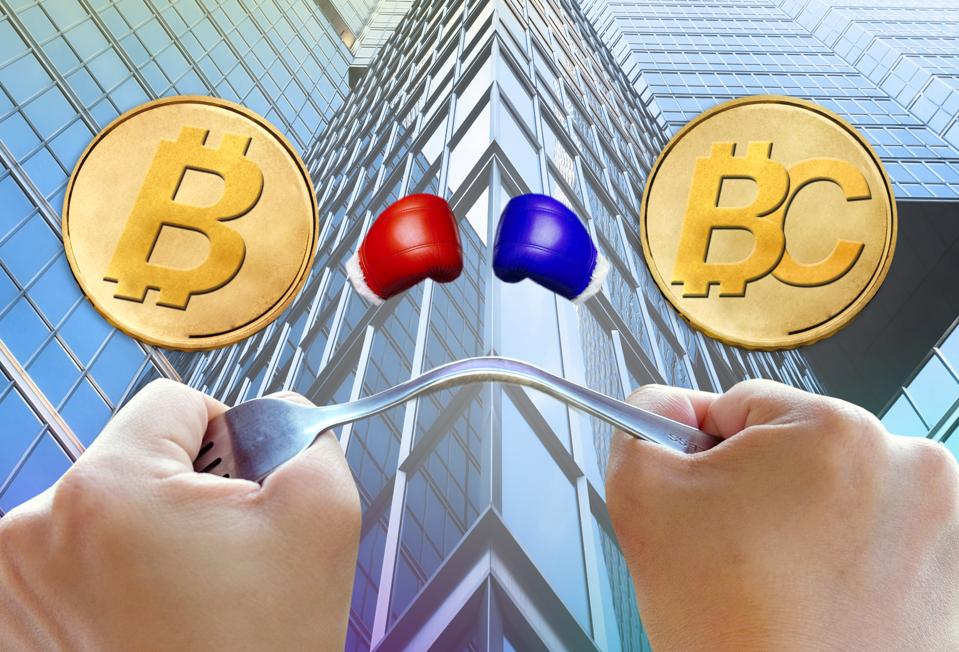
Bitcoin vs. Bitcoin Cash: What's the Difference?


Image result for Bitcoin CashSince its inception, there have been questions surrounding Bitcoin’s ability to scale effectively. Bitcoin is a cryptocurrency that exists within network of computers, within the blockchain. This is revolutionary ledger-recording technology. It makes ledgers far more difficult to manipulate for a couple reasons: The reality of what has transpired is verified by majority rule, not by an individual actor. And this network is decentralized; it exists on computers all over the world.
The problem with this technology is that it’s slow. Like, really slow, especially in comparison to banks that deal with credit card transactions. Visa processes 150 million transactions per day, averaging out to roughly 1,700 transactions per second. And their capability far surpasses that, at 24,000 transactions per second.
How many transactions can the Bitcoin network process per second? Seven. Transactions take about 10 minutes to process. And as the network of Bitcoin users grows, waiting times will get longer, because there are more transactions to process without a change in the underlying technology that processes them.
The latest debates around Bitcoin’s technology have been concerned with this central problem of scaling and increasing the speed of the transaction verification process. There are two major solutions to this problem, either to make the amount of data that need to be verified in each block smaller, making transactions faster and cheaper or to make the blocks of data bigger, so that more information can be processed at one time.

The Difference Between Bitcoin and Bitcoin Cash

In mid July 2017, mining pools and companies representing roughly 80-90% of Bitcoin computing power voted to incorporate a technology known as a segregated witness, called SegWit2x. SegWit2x makes the amount of data that needs to be verified in each block smaller, by removing signature data from the block of data that needs to be processed in each transaction, and having it attached in an extended block. Signature data has been estimated to account for up to 65% of data processed in each block, so this is not an insignificant technological shift. Talk of doubling the size of blocks from 1mb to 2mb in November has ramped up, and is expected.fThis would also go some ways in improving Bitcoin’s scalability. In mid-October, Bitcoin scientists from Bitcoin Unlimited revealed they had mined the world's first 1GB block, 1,000 times bigger than the normal size.

Related image

Bitcoin Cash is a different story. Bitcoin Cash was started by Bitcoin miners and developers equally concerned with the future of the cryptocurrency, and its ability to scale effectively. These individuals had their reservations about the adoption of a segregated witness technology, though. They felt as though SegWit2x did not address the fundamental problem of scalability in a meaningful way, nor did it follow the roadmap initially outlined by Satoshi Nakamoto, the anonymous party that first proposed the blockchain technology behind cryptocurrency. Furthermore, the process of introducing SegWit2x as the road forward was anything but transparent, and there were concerns that its introduction undermined the decentralization and democratization of the currency.
On August 1st, some miners and developers initiated what is known as a hard fork, effectively creating a new currency: Bitcoin Cash. Bitcoin Cash has implemented an increased block size of 8mb, to accelerate the verification process, with an adjustable level of difficulty to ensure the chain’s survival and transaction verification speed, regardless of the number of miners supporting it. This has raised concerns about the security of Bitcoin Cash.
(For more on cryptocurrency, read: Does Crypto Have Intrinsic Value? It Depends)


The Future of Cryptocurrency

This development could mean any number of things for the future of cryptocurrency. The situation is very fluid, and market valuations are both constantly calibrating and volatile. It’s going to be difficult to get a clear picture until Bitcoin Cash has been running for a little while (or fails), and until Bitcoin implements its segregated witness technology later this month, and then doubles the size of its blocks three months later.
In a blog post earlier this week titled “The Crypto Currency Debate: Future of Money or Speculative Hype?”, “dean of valuation” and NYU Stern Professor Aswath Damordan said that the future of cryptocurrency as a currency, as opposed to a speculative asset as it is so often treated, depends on cryptocurrency developers thinking of their technology as a “transaction medium and acting accordingly”. Both of these moves seem to be aimed at improving cryptocurrency technology as a medium of exchange.
Improving cryptocurrency as a transaction medium will depend on maintaining the high level of security that Bitcoin has always ensured, while also improving transaction speeds. Bitcoin will continue to be highly secure, but how much its transaction speeds will improve is unclear. Bitcoin Cash, once its difficulty has adjusted, could have transactions processing in two minutes and 30 seconds. The security of the Bitcoin Cash blockchain, though, is unclear.
It will also depend on miners’ and users’ vision for the currency. If Bitcoin really does undermine the decentralized nature of the network, and the democratic possibilities of the blockchain technology, people may look elsewhere for a cryptocurrency with more exciting potential. (For more insights on how the market has changed since the fork, read: What's Bitcoin Cash and Where the Heck Did it Come From?)


Source: 
https://goo.gl/SCNvuZ

Monday, October 9, 2017

IPO Calendar


Image result for cargurus nc

This Week

 • 4 Total
Company NameProposed SymbolExchangePrice RangeSharesWeek Of
CarGurusCARGNasdaq$13.00 - $15.009,400,00010/9/2017
OptiNoseOPTNNasdaq$15.00 - $17.006,250,00010/9/2017
OrthoPediatricsKIDSNasdaq$12.00 - $14.004,000,00010/9/2017
Restoration RoboticsHAIRNasdaq$7.00 - $9.003,125,00010/9/2017

Image result for fat brands

Next Week

 • 8 Total
Company NameProposed SymbolExchangePrice RangeSharesWeek Of
FAT BrandsFATNasdaq$12.002,000,00010/16/2017
Gadsden Growth PropertiesGADSNYSE$9.00 - $11.003,500,00010/16/2017
LongfinLFINNasdaq$5.0010,000,00010/16/2017
MongoDBMDBNasdaq$18.00 - $20.008,000,00010/16/2017
QudianQDNYSE$19.00 - $22.0037,500,00010/16/2017
RISE EducationREDUNasdaq$12.00 - $14.0011,000,00010/16/2017
RumbleOnRMBLNasdaq$9.492,000,00010/16/2017
SeaSENYSE$12.00 - $14.0049,690,00010/16/2017
IPO content provided by Renaissance Capital LLC,


Tuesday, October 3, 2017

A Tale Of 4 IPOs: Facebook, Alibaba, Snap And Square

Image result for IPO

Here's one simple lesson to be learned from the initial public offerings of Facebook (FB), Alibaba (BABA), Snap (SNAP) and Square (SQ): Big-buzz IPOs don't always live up to the hype – at least not at first.
Buying a stock right when it has an IPO is a high-risk proposition, regardless of how convincing the hype may seem.
Facebook, Alibaba, Snap and Square all headed south from their second week of trading, providing clear examples of why you should wait for a new IPO to form its first base before you invest.
It's an important rule to keep in mind as Roku (ROKU) begins trading and we wait for the market debuts of Uber, Airbnb and others in the next crop of initial public offerings.

IPO Lessons Learned

From its first weekly close on May 18, 2012, Facebook sank 54% over the next four months. Snap plunged 48% from its first weekly close on March 3 of this year until apparently finding a bottom in August. And after closing out its first week of trading on Nov. 20, 2015, Square fell 37% over the next 10 weeks.
Keep in mind that if you take a 50% loss, you need a 100% gain just to get back to break-even.
Alibaba fared better when it went public in September 2014, declining just 12% from its first weekly close while forming an IPO base.
It did offer a buying opportunity when it broke out of that pattern in October, but the Chinese internet giant soon proved another point about new stocks: They can be quite volatile.
After quickly rising as much as 20%, Alibaba reversed course, falling 47% from November 2014 until finding a bottom in September 2015. The stock continued to struggle and didn't really get going until it launched its current run with a breakout at the beginning of this year.
Alibaba is currently a member of IBD Leaderboard.

Patience Pays Off

Although many investors chose to ignore it amid all the buzz, Facebook flashed a serious warning sign before its IPO: a sharp slowdown in earnings growth.
In the three quarters prior to going public, the company's EPS gains slowed from 100% to 25% to 9%. And in Facebook's first two reports as a publicly traded company, it posted 0% growth.
It wasn't until about 14 months after its initial public offering that Team Zuckerberg finally found its mobile mojo and delivered a return to growth with earnings of 13 cents a share on a 58% gain in revenue for Q2 2013.
Facebook bolted out of a double bottom on that report and has since made a fivefold run.
Interestingly, it also took Square about 14 months of roller-coaster action before it found its market legs and began to climb. It's no coincidence that the provider of payment-processing software started to climb as its earnings growth started to improve.
Square recently launched a new breakout and made IBD's list of stocks expecting 50%-plus EPS growth in Q3. Facebook is working on a new flat base.
And then there was Snap.
After heading due south for months after it went public, the Snapchat parent seems to have recently found a bottom. But the stock has not yet formed a proper base and, unlike Alibaba, Facebook and Square, Snap has no profits.
So while Snap may go on to make a nice run, the jury is still out.

Make An IPO Prove Itself Before You Buy

Buying a brand-new IPO can be tempting, but it can also be costly and painful.
As the examples above show, you can significantly reduce your risk and still reap plenty of rewards if you follow these three steps:
In other words, just like with any stock, make an IPO prove its fundamental and technical strength before you invest.
If the pre-IPO buzz turns into a bust, you'll be glad you stayed out. And if the hype turns out to be true, you'll still have plenty of chances to profit.
Source:https://goo.gl/U5ih2q