Showing posts with label Baidu. Show all posts

Sunday, December 10, 2017

Top VC deals: Baidu invests in electric vehicles, Gilead buys cancer-fighting start-upBai

  • A Tesla and Toyota competitor in China, WM Motor, has raised $1.8 billion from investors including Baidu Capital to make smart electric vehicles.
  • Gilead Sciences acquired Cell Design Labs in a deal valued at $567 million. The company is developing cell-based cancer therapies.
  • Indigo Agriculture closed its series D round of funding at $203 million for probiotics that help farmers maximize crop yields.

Here's a round-up of the most important deals in venture capital from the past week.

Exits


Former Genentech executives Marc Tessier-Lavigne and Ryan Watts took their start-up, Denali Therapeutics, public this week. They raised more than $248 million in their stock market debut. Denali is expected to be the largest initial public offering in the biotech industry this year. The company is developing drugs to treat Parkinson's disease and other neurodegenerative disorders. Denali priced its shares at $18 in the middle of the expected range. Prior to its IPO, it had raised about $350 million in venture funding from the Alaska Permanent Fund, Arch Venture Partners, Flagship Ventures, F-Prime Capital Partners and Fidelity Biosciences.
Drugmaker Gilead Sciences is acquiring Cell Design Labs, a start-up developing cell-based therapies for cancer and other complex diseases. The deal was valued at up to $567 million, Cell said. Previously, Cell Design Labs raised $34.4 million in venture funding from firms including: Kleiner Perkins Caulfield and Byers, Kite Pharma (a division of Gilead), Osage Ventures and Mission Bay Ventures.

Start-ups

Baidu Capital, the venture arm of China's search titan, announced their investment in electric vehicle maker WM Motor this week. The electric vehicle start-up has so far raised $1.8 billion of a targeted $4 billion round, WM Motor's CEO, Freeman Shen, confirmed in a press statement. A Toyota and Tesla competitor, WM Motor is also backed by SIG and Ameba Capital, among others. The company is expected to unveil its first mass-market, electric vehicle next week-- an all-electric SUV priced at around $30,000 with a 372-mile range.
Chinese commuters ride shared bicycles during rush hour on April 12, 2017 in Beijing, China.
Getty Images
Chinese commuters ride shared bicycles during rush hour on April 12, 2017 in Beijing, China.
Station-free bike sharing start-up Ofo raised more than $1 billion in equity funding in a deal that included Alibaba, according to a Financial Times report. The bike-sharing market in China is saturated enough that discarded bikes have become an issue in cities there, and at least one start-up, Bluegogo, recently folded. But Ofo and Mobike have become mainstays. According to FT, Ofo has "Put 10 million bikes on China's city streets, as well as 100,000 in 19 other countries around the world. On Wednesday Ofo launched in Paris."
SoftBank Vision Fund lead a $450 million investment into real-estate site Compass, which was previously known as Urban Compass. The company provides real estate agents with listings and other tools, and provides high-end home buyers and renters with listings targeted to their preferences. TechCrunch reported that Compass expects to rack up "16,000 transactions...and more than $350 million in revenue" this year.
Shell Technology Ventures, ABB Ventures and Cisco Ventures joined G2VP in a $33 million Series C funding round for Kespry. The start-up makes and uses drones to help businesses monitor and gather aerial data over industrial work sites, farms and infrastructure. Many of its customers are insurance companies that need to survey damages before paying out claims.
Fetch Robotics raised $25 million in a Series B round of venture funding for robots used in warehouses and other commercial settings. The company's autonomous robots can move loads around a warehouse or fulfillment center, and gather data about safety, productivity and more as they go. Sway Ventures led the round joined by O'Reilly AlphaTech Ventures (OATV), Shasta Ventures, and SoftBank.

Funds and firms

Steve Case
Paul McNamara | CNBC
Steve Case
Jeff Bezos, Eric Schmidt, Howard Schultz, Tory Burch and a cadre of other influential entrepreneurs and investors have joined Steve Case in his mission to back start-ups in underestimated "flyover" states. They have formed a new, $150 million fund called Rise of the Rest which will invest in fast-growing start-ups outside of Silicon Valley, Boston and New York.
Investor Shervin Pishevar exited his firm, Sherpa Capital, this week and Hyperloop One due to allegations of sexual misconduct with several women. Boston tech entrepreneur Laura Fitton shared details on the record with Axios. She said that Pishevar lured her to his hotel room under false pretenses, and made aggressive and unwanted advances despite her clear objections. He has also previously been accused of rape. Pishevar has denied any wrongdoing.
Despite rampant gender bias in tech and venture capital, the ranks of women are growing in the field, including in senior investing roles at major funds. This week, for example, FirstMark announced it had hired Beth Ferreira as Managing Director. And Acceleprise announced that it has hired Whitney Sales as General Partner.
Women who are investing partners at major venture firms have recently created a consortium called Female Founder to help women who are entrepreneurs. The group, founded by Sequoia's Jess Lee, is hosting "Female Founder Office Hours," and other events in different business and tech hubs across the U.S. The next event will be hosted by NEA Partner Dayna Grayson and USV Partner Rebecca Kaden in New York this January.

Source: https://goo.gl/fTD5ox

Tuesday, March 8, 2016

3 Ways To Play The Rising Asian Middle Class

 Includes: ABEVBABABIDUECONEEMAFIZZFMXUFGISHKIIIIK

Summary

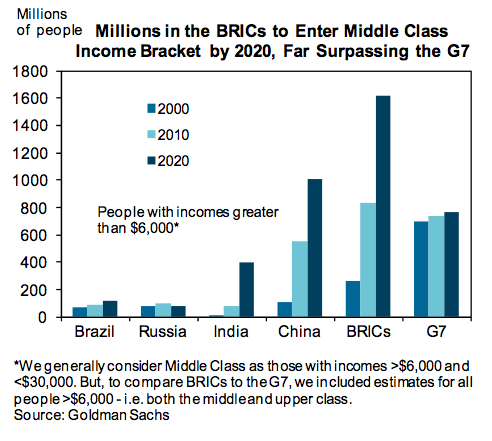
The Asian middle class is set to rise from around 600 million people now to 3 billion by 2030.
How will the Asian middle class spend its money?
My 3 ways to play the rising middle class.
Image result for asian middle classI wrote previously here on Seeking Alpha regarding Asia's rising middle class (you can read that article here). The key takeaway from that article was the massive demographic change occurring in emerging Asia now. Essentially, the Asian middle class is rising — from 600 million in 2015 on its way to 3 billionby 2030. To get a feel for this massive growth, it works out to around 438,000 new entrants a day to the middle class — every day.
Most of the rise will be in China and India, as the chart below clearly illustrates. However, other highly populous countries in ASEAN will also be part of this boom — think Indonesia, Philippines, Vietnam, Thailand, and Malaysia.
However, what's important as investors is how to capitalise on this incredible rise. To do this, I ask myself what the rising Asian middle class do with its greater disposable income. My thoughts are as follows:
  1. Buy food.
  2. Buy or rent housing (condo units, etc).
  3. Buy transport devices (mostly cheap motorbikes), clothes, cheap smartphones, internet service, online shopping, and entertainment.
Remember the Asian middle class will not be the same as the Western middle class that rose over the past 50 years. It will be a much larger group: billions. They will have lower incomes, so they will spend on essentials first; hence food is number 1 on my list.

My 3 ways to play the rising Asian middle class

1. Buy food-producing companies (consumer staples)

According to DBS: "Demand for food will hit nearly $3 trillion per year by 2020, double what it was a decade ago, opening up business and investment opportunities in food retailing, particularly in groceries".

Food ETFs to consider

PowerShares Dynamic Food & Beverage (NYSEARCA:PBJ) - Price: $31.89

The fund generally will invest at least 90% of its total assets in common stocks of food and beverage companies that comprise the underlying intellidex. The underlying intellidex was composed of common stocks of 30 U.S. food and beverage companies. These companies are engaged principally in the manufacture, sale or distribution of food and beverage products, agricultural products and products related to the development of new food technologies.
Holdings include McDonald's Corporation (NYSE:MCD), Starbucks (NASDAQ:SBUX), General Mills (NYSE: GIS), Kroger (NYSE: KR), Pepsico Inc (NYSE:PEP), National Beverage Corp (NASDAQ:FIZZ).
The downside is no local Asian food companies.
Current PE is 18.28, Price/Book 3.4, Yield 1.26%. The expense ratio is 0.58%.

Market Vectors Agribusiness ETF (NYSEARCA:MOO) - Price: $45.44

The Agribusiness Index is comprised of equity securities of companies that generate at least 50% of their revenues from: (1) agri-chemicals, animal health and fertilizers, seeds and traits, (2) farm/irrigation equipment and farm machinery and/or (3) agricultural products, aquaculture and fishing, livestock, plantations and trading of agricultural products. Top holdings are Syngenta AG (NYSE:SYT) (8.14%), Monsanto (NYSE:MON)(8.11%), and Deere & Company (NYSE:DE) (6.83%).
The ETF has been beaten down heavily in the recent rout and trading near 5 year lows, making a nice entry point.
Current PE is 15.06, Price/Book 2.01. Yield 3.05%. The expense ratio is 0.56%.
I chose MOO over iShares MSCI Global Agricultural Fund (NYSEARCA:VEGI) purely because the later has a higher PE of 21.8 (end of January 2016). However, for investors preferring a larger more liquid fund VEGI would be preferable. Their holdings are quite similar, as is their expense ratio with VEGI being the cheaper at 0.4%.

EGShares Emerging Markets Consumer (NYSEARCA:ECON) - Price: $20.72

As the name suggests this ETF tracks consumer stocks in the emerging markets, including 40% in Asia, and 33% in Latin America. Top holdings include Naspers (OTCPK:NAPRF), Fomento Economico Mexicano SAB de CV (OTC:FMXUF), Ambev SA ADR (NYSE:ABEV), and Tata Motors ADR (NYSE:TTM).
Current PE is 21.98, yield 1.18%. The expense ratio is 0.84%.
Of the three ETFs listed above ECON would be my choice, as it is more tiered towards emerging markets and Asia. I was not able to find a pure Asian food ETF, however it would be an excellent idea.
A larger list of consumer staples ETFs can be found here.

Food stocks to consider

Image result for asian middle classThere is a huge choice of Asian food companies, and the industry is fiercely competitive. One can buy the grain suppliers, the food producers, or the retail shops that sell the food. I think the later have the greatest barriers to entry and therefore the best pricing power and margins. Having said that these are my top ideas.
Robinsons Retail Holdings Inc (OTCPK:RRETY) - Price: $12.80
Robinsons operates as a retail company in the Philippines. The company operates in six segments: supermarkets, department stores, DIY stores, convenience stores, drug stores, and specialty stores. As of December 31, 2014, it had a portfolio of 1,327 stores, which included 111 supermarkets, 42 department stores, 161 DIY stores, 450 convenience stores, 320 drug stores, and 243 specialty stores.
The Philippines is just entering the demographic window with a booming economy (it grew 6.3% in 4Q 2015), driven by Overseas Foreign Workers (OFW) remittances, and the BPO sector (call centers etc). Robinsons and SM dominate the shopping market sector. On that note SM Investments (OTCPK:SMIVY) (which will soon own 77.3% of the expanded SM Retail group), is also a good investment. SM also own some shopping centers in China.
Robinsons current PE is 19.6, with a dividend yield of 0.11%.
Starbucks - Price: $60.04
I choose Starbucks because they are currently expanding rapidly (especially into Asia), and should benefit from the rising Asian middle class. Their brand name ensures their cafes are always busy.
In 2015, there were 21,366 Starbucks stores in 64 countries around the world. Starbucks plans to open 500 stores in China every year until 2021, an expect to increase China store count by at least 30%. In 2016, they plan to open1,800 new stores, of which 70% are expected outside the US.
Coffee is a legal addictive drink, and meeting friends in Starbucks is very trendy in Asia. Finally, there is talk Starbucks may introduce some alcoholic beverages (at night time) and drive through, starting in their US stores.
I choose Starbucks ahead of, say, McDonald's as it is earlier in its development, and coffee is quite addictive.
Starbucks current PE is 31.44, with a yield of 1.36%. Saxo consensus analyst is an 80% buy, 20% hold, 0% sell. Analyst consensus target is $68.13. A great stock to accumulate on dips.

San Miguel Corporation (OTCPK:SMGBY) - Price: $17.50

SMC is Southeast Asia's largest publicly listed food, beverage and packaging company as well as the Philippines' largest corporation in terms of revenue, with over 17,000 employees in over 100 major facilities throughout the Asia-Pacific region. San Miguel Beer is their flagship product, and it is exported globally. COO Ramon Ang is world class. My only concern would be the thin net profit margin of 1.88%. PE is a reasonable 20.61. Unfortunately the US listing looks a bit illiquid.
Some of the top ten global food and beverage companies below are definitely worth considering.
The Coca-Cola Co (NYSE:KO) - Price = $43.77, PE 26.21.
Coke is popular in Asia, however the carbonated beverages are sometimes viewed as unhealthy.
Nestlé (OTCPK:NSRGYOTCPK:NSRGF) - Price = $43.77, PE 26.21.
Milk powder, coffee etc. A global powerhouse.
Unilever (NYSE:UL) - Price = $43.37, PE 22.85.
Sells over 400 brands globally such as Axe/Lynx, Dove, Omo, Becel/Flora, Heartbrand ice creams, Hellmann's, Knorr, Lipton, Lux, Magnum, Rama, Rexona, Sunsilk and Surf.
You can read here about the top ten global food giants. For me I prefer to pick more Asian based food and beverage companies trading on lower PEs such as San Miguel Corporation discussed above.

Wednesday, May 13, 2015

9 Best Internet Stocks to Buy Now That AOL Is Being Acquired by Verizon

NEW YORK (TheStreet) -- With Verizon (VZ) scooping up AOL (AOL) in a deal worth $4.4 billion, are there other Internet companies that investors should be placing their bets on?
The $30-billion internet software and services industry is highly competitive with companies like Google (GOOGL)eBay (EBAY) andYahoo! (YHOO) all formidable players. But the industry is growing.
Consumers are becoming more comfortable with using the Internet for purchasing goods or services. "Looking forward, companies' success will depend on their ability to adopt rapidly evolving technologies, alter services to meet industry standards, and improve the performance and reliability of services," according to TheStreet Ratings. "Investment in research and development will continue to be an integral part of company and industry success."
Still, the industry is rife with challenges. In the advertising segment, competition is particularly intense, "as a result of consolidation and low entry barriers, which has caused price reductions for advertising space, implying a drop in margins," TheStreet Ratings said. Another challenge the industry faces is the increasing uncertainty of security, particularly of personal information as hacking becomes more prevalent.
Incidentally, TheStreet Ratings had a "buy" rating on AOL in its latest report, dated May 10 -- just two days before Verizon announced it was acquiring the company. Here are nine other Internet companies you should buy now.
The stocks on this list are all large-cap companies in the "Internet Software & Services" industry, rated "buy" with a B or better rating. Find out which stocks to buy and when you're done, be sure to check out which broadcasting companies to add to your portfolio.
TheStreet Ratings, TheStreet's proprietary ratings tool, projects a stock's total return potential over a 12-month period including both price appreciation and dividends. Based on 32 major data points, TheStreet Ratings uses a quantitative approach to rating over 4,300 stocks to predict return potential for the next year. The model is both objective, using elements such as volatility of past operating revenues, financial strength, and company cash flows, and subjective, including expected equities market returns, future interest rates, implied industry outlook and forecasted company earnings.
Buying an S&P 500 stock that TheStreet Ratings rated a "buy" yielded a 16.56% return in 2014 beating the S&P 500 Total Return Index by 304 basis points. Buying a Russell 2000 stock that TheStreet Ratings rated a "buy" yielded a 9.5% return in 2014, beating the Russell 2000 index, including dividends reinvested, by 460 basis points last year. Note: Year-to-date returns are based on May 12, 2015 closing prices.
YHOO Chart YHOO data by YCharts 

9. Yahoo! (YHOO) 
Market Cap: $41 billion 
Rating: Buy, B
Year-to-date return: -13.2%
Image result for Yahoo!
Yahoo! Inc. provides search and display advertising services on Yahoo properties and affiliate sites worldwide.
"We rate YAHOO INC (YHOO) a BUY. This is driven by some important positives, which we believe should have a greater impact than any weaknesses, and should give investors a better performance opportunity than most stocks we cover. The company's strengths can be seen in multiple areas, such as its revenue growth, largely solid financial position with reasonable debt levels by most measures, notable return on equity, reasonable valuation levels and solid stock price performance. We feel its strengths outweigh the fact that the company has had sub par growth in net income."
Highlights from the analysis by TheStreet Ratings Team goes as follows:
  • YHOO's revenue growth has slightly outpaced the industry average of 5.9%. Since the same quarter one year prior, revenues slightly increased by 8.2%. This growth in revenue does not appear to have trickled down to the company's bottom line, displayed by a decline in earnings per share.
  • Although YHOO's debt-to-equity ratio of 0.04 is very low, it is currently higher than that of the industry average. Along with this, the company maintains a quick ratio of 4.44, which clearly demonstrates the ability to cover short-term cash needs.
  • The company's current return on equity greatly increased when compared to its ROE from the same quarter one year prior. This is a signal of significant strength within the corporation. Compared to other companies in the Internet Software & Services industry and the overall market, YAHOO INC's return on equity exceeds that of both the industry average and the S&P 500.
  • Compared to its closing price of one year ago, YHOO's share price has jumped by 28.76%, exceeding the performance of the broader market during that same time frame. Turning to the future, naturally, any stock can fall in a major bear market. However, in almost any other environment, the stock should continue to move higher despite the fact that it has already enjoyed nice gains in the past year.

8. Qihoo 360 Technology Co. (QIHU) (ADR) 
Market Cap: $7.2 billion 
Rating: Buy, B
Year-to-date return: -1%
Qihoo 360 Technology Co. Ltd., through its subsidiaries, provides Internet services in the People's Republic of China. The company operates through Internet Services and Others segments.
Image result for Qihoo 360 Technology Co"We rate QIHOO 360 TECHNOLGY CO -ADR (QIHU) a BUY. This is driven by a number of strengths, which we believe should have a greater impact than any weaknesses, and should give investors a better performance opportunity than most stocks we cover. The company's strengths can be seen in multiple areas, such as its robust revenue growth, notable return on equity, impressive record of earnings per share growth, compelling growth in net income and expanding profit margins. We feel its strengths outweigh the fact that the company has had lackluster performance in the stock itself."
Highlights from the analysis by TheStreet Ratings Team goes as follows:
  • QIHU's very impressive revenue growth greatly exceeded the industry average of 5.9%. Since the same quarter one year prior, revenues leaped by 94.6%. Growth in the company's revenue appears to have helped boost the earnings per share.
  • QIHOO 360 TECHNOLGY CO -ADR reported significant earnings per share improvement in the most recent quarter compared to the same quarter a year ago. The company has demonstrated a pattern of positive earnings per share growth over the past two years. We feel that this trend should continue. During the past fiscal year, QIHOO 360 TECHNOLGY CO -ADR increased its bottom line by earning $1.71 versus $0.76 in the prior year. This year, the market expects an improvement in earnings ($3.48 versus $1.71).
  • The net income growth from the same quarter one year ago has significantly exceeded that of the S&P 500 and the Internet Software & Services industry. The net income increased by 361.4% when compared to the same quarter one year prior, rising from $16.65 million to $76.82 million.
  • Current return on equity exceeded its ROE from the same quarter one year prior. This is a clear sign of strength within the company. Compared to other companies in the Internet Software & Services industry and the overall market, QIHOO 360 TECHNOLGY CO -ADR's return on equity exceeds that of both the industry average and the S&P 500.
  • The gross profit margin for QIHOO 360 TECHNOLGY CO -ADR is currently very high, coming in at 81.90%. Despite the high profit margin, it has decreased significantly from the same period last year. Despite the mixed results of the gross profit margin, the net profit margin of 17.81% trails the industry average.

Thursday, April 23, 2015

Wall Street Breakfast: Where's The Value These Days?

 18 comments  |  Includes: AAPLABTABXAECAGIAMZNANGIAPCARRSASML

Economy

China's factory activity declined at its fastest pace in a year, according to HSBC/Markit's Purchasing Managers Index. PMI fell to 49.2 (est. 49.6) in April, beneath the 50-point watermark that separates growth from a contraction. In Japan, manufacturing fell to 49.7 (est. 50.8), dropping below 50 for the first time since July 2014.
Stocks ended higher Wednesday after a steady advance, with the Nasdaq finishing fewer than 15 points away from its all-time high, lifted by better than expected earnings and an upbeat report on the housing market. All 10 S&P sectors registered gains, with tech (+1.1%) leading the way.
Gold tumbled to its sharpest single-session loss in more than six weeks Wednesday after strong U.S. existing home sales raised expectations for a Fed interest rate hike in June. Gold futures fell $16.20 (-1.4%) to settle at $1,186.90/oz., while silver fell 1.3% to $15.77. Metal miners fell in sympathy:ABX -3.4%AU -4%GG -2.8%SBGL -6.8%GOLD -1.5%AUY -3.7%NG-1.9%GFI -5%SLW -2.1%PAAS -3.5%NEM -3.1%EGO -1.4%RGLD-2.1%FNV -3.4%KGC -1.7%IAG -4.1%BTG -2.5%HL -3.8%AGI-5.4%AUQ -4.4%.
Boston Fed chief Eric Rosengren cautioned that weak growth data could delay interest rate hikes. "There has definitely been a weakness to the tone of the data. The employment report was weak. That was little bit of a surprise... Certainly what is happening globally with Greece and China would indicate that there may be more softness elsewhere in the world than we might have anticipated a few months ago. That is not a particularly positive development."
Now might be a good time for U.S. investors to pick up relatively cheap overseas assets, Research Associates' Michele Mazzoleni says. People are buying dollars in anticipation of higher U.S. rates, but there is no certainty, and some Fed officials appear to be having misgivings about tightening policy too soon, in part due to the strong dollar.
Existing homes sold at the fastest pace in 18 months in March - a seasonally adjusted annualized rate of 5.19M, up 6.1% from February and 10.4% from a year ago. The median existing-home price of $212.1K is up 7.8% Y/Y.
22% of hybrid and electric car owners trading in this year opted to go for a SUV, up from 18.8% a year ago and 11.9% three years ago, as lower gas prices shift the breakeven point. The rate at which hybrid and EV car owners bought another green car fell below 50%.
What's value these days? "We have consumer staples (NYSEARCA:XLP) and healthcare stocks (NYSEARCA:XLV) trading on average at 20x earnings and five times book value - while these stocks aren’t often thought of as value, they actually comprise 20% of the Russell 1000 Value (NYSEARCA:IWB) index," Richard Pzena said on the company's (NYSE:PZN) earnings call yesterday. Add REITs and utilities to the mix and it's pretty hard to call that value index "value" anymore. "The natural question: Is it different this time? Does this era of low interest rates presage something permanently different... We believe that the odds of such an outcome are low." Pzena presumably remains bullish on the large-cap financial sector names (NYSEARCA:XLF) which continue to be weighed down by ZIRP.

Stocks

The FCC recommended that the proposed Comcast (NASDAQ:CMCSA)/Time Warner Cable (NYSE:TWC) merger undergo a hearing, seen by some as a "deal-killer." A hearing would put the merger in the hands of an administrative law judge, a strong sign the FCC doesn't see the merger to be in the public interest.
Shares of NCR jumped 6% in post-market trading following a report it (NYSE:NCR) is exploring strategic alternatives such as asset divestitures, buybacks, and a dividend; a full sale of the company is a less likely option. The report comes two months after activist Jana Partners disclosed a 7.1% stake and ahead of NCR's April 28 Q1 report.
Less than three years after striking a deal to buy Motorola Home for $2.35B, Arris (NASDAQ:ARRS) announced it's buying U.K. set-top hardware/software provider Pace (OTC:PCMXF) for $2.1B in cash and stock. Pace shareholders will own 24% of the post-merger company. The fragmented nature of the global set-top industry could help secure regulatory approval. The deal is expected to close in late 2015. ARRS +28% AH.