Showing posts with label Chinese Smart phone. Show all posts

Thursday, July 27, 2017

Chinese tech giant Huawei sees 15% revenue jump in first half

People try using Huawei smartphones at an exhibition.

Zhang Peng | LightRocket | Getty Images
People try using Huawei smartphones at an exhibition.

  • Huawei announced that it saw a 15 percent jump in revenue for the first six months of 2017 compared to the comparable year-ago period
  • The telecommunications services provider said its carrier, enterprise and consumer businesses had solid growth

Huawei, the world's third-largest smartphone vendor by shipment, said that its consumer business group saw sales revenue for the first six months ending in June grow by 36.2 percent on-year to 105.4 billion yuan ($15.65 billion).
Its smartphone shipment rose 20.6 percent on-year to 73.01 million. In May, a report from Gartner said Huawei had about 9 percent of the global market share in the first quarter of 2017, behind leaders Samsung and Apple.
Image result for Huawei
More recently, research firm Canalys said Huawei remained the market leader for smartphones within China despite a 3 percent annual decline in device shipments in the mainland.
"Our Consumer Business Group continued to deliver extraordinary growth, beating the industry average and penetrating high-end markets around the globe," said Richard Yu, chief executive officer of Huawei's Consumer Business Group, in a prepared statement.
The Chinese smartphone maker said it had 22.1 percent of marketshare in the Greater China region, and also saw an 18 percent on-year growth in shipments across Europe.
Earlier, Huawei said it saw a 15 percent on-year jump in overall revenue for the six months ending in June, with solid growth across its carrier, enterprise and consumer business groups. Still, it was the slowest growth for that period in four years.
Total revenue for the first six months of 2017 came in at 283.1 billion yuan ($42.04 billion) and operating margin was 11 percent. Huawei said it expected to round out the year in a positive financial position.
Reuters and CNBC's Sophia Yan contributed to this report.

Tuesday, July 11, 2017

China's Xiaomi plans to flood the world with 2,000 stores within three years


Image result for xiaomi phone

  • Xiaomi Senior Vice President Wang Xiang says the company wants 2,000 new stores within the next three years
  • "You will see us in almost every country," Wang said
  • After some hiccups, things seem to be turning around for the company: On Friday, Xiaomi said it posted a record high with more than 23 million smartphone shipments in the second quarter
BEIJING, China — Chinese tech firm Xiaomi plans to flood the world with 2,000 new stores within the next three years, a company executive told CNBC.
Half of those shops will be opened overseas with partners and the other half will be owned and operated by Xiaomi in China, and it's all part of the company's big ambitions to keep growing abroad, said senior vice president Wang Xiang, who oversees the firm's global strategy. In the next few years, "we will definitely be a global player," he said.
"You will see us in almost every country," Wang projected.
Beijing-based Xiaomi started out selling low-cost smartphones and exploded as one of the world's leading vendors within a handful of years. It even set a Guinness World Record for selling the most number of phones ever in a single day — 2.12 million units.
Since then, the firm has added products, including smart fitness bands, smart scooters, smart air purifiers, and more, splashing out to more than 40 countries and regions. The brand, which primarily sells direct to customers via online channels, or via distribution partnerships, has become so popular in China that at times it's easy to forget that the start-up only launched in 2010.


  • Xiaomi Senior Vice President Wang Xiang says the company wants 2,000 new stores within the next three years
  • "You will see us in almost every country," Wang said
  • After some hiccups, things seem to be turning around for the company: On Friday, Xiaomi said it posted a record high with more than 23 million smartphone shipments in the second quarter
It's a company that's also taken a cue from Silicon Valley company culture. Xiaomi's young employees buzzed around headquarters on Monday, surrounded by tons of stuffed Mi bunnies — the firm's cute white rabbit icon — perched on shelves and desks. Walls were dotted with reprints of iconic works by artists including Vincent van Gogh and Camille Pissarro. One staffer traveled in the office via Xiaomi's own smart scooter, as people streamed in and out of the canteen chatting about work and weekend plans, and screens showed photos of members of the Mi soccer club.


Big global expansion plans

This year, Xiaomi has already expanded into countries including Russia, the United Arab Emirates and Egypt, and is even manufacturing devices locally in India and Indonesia. Next year, the company is looking to focus more on Southeast Asian nations such as the Philippines and in eastern Europe, Wang said.


And although Xiaomi's low-cost offerings — the RedMi 4A phone is 599 yuan ($88) in China — perhaps make more sense in developing markets, the company also wants to make inroads in places like western Europe.
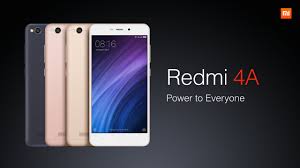
Image result for the RedMi 4A phoneAside from building brand awareness abroad, Wang said Xiaomi has a peculiar problem with its affordably-priced phones and products. "If you buy a product from any shop with a low price, normally … your expectation is quality may not be good, but we want to prove you don't need to spend a lot of money to buy a high quality product," he said, deeming that "the most difficult challenge for us."
That's where the push to open more shops come in — "seeing is believing," Wang said. "You have to let the people try the product first." Brick-and-mortar stores may seem a departure from Xiaomi's e-commerce strategy, but the company says they've been a huge success in creating a seamless online-to-offline experience for customers.

Internet of things

Xiaomi also wants to get its popular portfolio of products to customers outside of China in hopes of leading the "internet of things," linking devices like smartphones to every day objects like televisions and coffee makers. Think lamps that shut down when you fall into a deep sleep or a rice cooker you can turn on before you get home. Xiaomi boasts it's paving the way as it already has 60 million devices connected to its online ecosystem.
To help with that, the firm last week announced it would cross-license patents with Nokia, a move that helps both companies develop new products. The deal gives the tech firms access to so-called standard essential patents — key ones that allow products to comply with an industry standard. Last year, Xiaomi inked a similar deal with Microsoft, buying up 1,500 patents.
The Nokia deal is a protective measure to "defend ourselves once we go into many, many more countries, according to Wang. "The key, actually, is to get more design freedom," he said. With "the patents we acquired, our engineers can design many, many more products more efficiently."
Despite the big international push, Xiaomi hasn't announced its revenues or the split between global and domestic sales. It is, after all, still a private company, and Wang declined to comment on any IPO plans. But the firm has been quick to tout its success in India, where sales hit $1 billion last year.

Bumpy road to the top

Xiaomi's exponential growth, though, has seen hiccups along the way. Supply chain issues have plagued the company — at first, Xiaomi wasn't able to ramp up production to meet customer demand.
But then, the firm's phone sales started slipping as it lost market share to competitors like Huawei and cheaper brands Oppo and Vivo — something industry analyst firms like Canalys have said happened before Xiaomi was able to find stronger growth with its other products.
On top of that, company executive Hugo Barra, who had been lured away from Silicon Valley, announced that he would leave the company and move back to the U.S. at the beginning of the year.
But it does seem things are turning around. On Friday, Xiaomi said it posted a record high with more than 23 million smartphone shipments in the second quarter of this year.
"Our recovery follows a year of setbacks that collectively signify the most challenging period in our company history," Xiaomi founder Lei Jun wrote in a letter to employees. But despite all of that, the firm is staying the course with big goals — to hit 100 billion yuan in sales this year, and to ship 100 million smartphones next year.
By Sophia Yan

Source: https://goo.gl/YhGDwX

Also Read :How to Buy Into Xiaomi Without Buying Its Stock. /   https://goo.gl/dXEPY5


Monday, March 14, 2016

China's $500 Billion Mobile Shopping Mania

Imagine getting a soft drink from a vending machine using only your smartphone. Or scanning a QR code to buy goods from a newspaper ad.
By harnessing these innovations — and more — China mobile shopping is barreling ahead of the United States. China is still the world's largest smartphone market, even though growth is slowing. It accounts for about 30 percent of the global smartphone market, and Chinese smartphone users are expected to jump from 526.8 million to 640 million in 2018, according to eMarketer. And its shoppers are using their gadgets to snap up a wide array of goods and services.
543226663
Mint Images | Getty Images
Nearly half of all China's e-commerce sales, totaling $505.7 billion, are made with mobile devices, versus roughly one-quarter in the U.S., according to eMarketer. By 2019, China's mobile sales will account for 71 percent of those sales.
"We don't see mobile buying plateauing for the next five years," said Monica Pearl, eMarketer's director of forecasting. "They'll increase because consumer behavior has changed." Feature-rich, cheap smartphones are also helping fuel the boom, she added.
China is, after all, a mobile first market, explains Brian Buchwald, CEO of consumer intelligence firm Bomoda. So it has been able to leapfrog past other markets, which mainly used PCs for purchases.
Sophisticated mobile payment apps are partly fueling the mobile boom. To grease buying, purchases are smooth and nearly seamless, since goods are bought in a few seconds with just one click. And an intense fight for market share between payment titans WeChat Pay and Alibaba's Alipay is fueling even more innovation. Apple Pay has only just recently stepped into the competitive arena.
Meanwhile, the Chinese government has allowed a free-flowing retail and payments marketplace.
"There are no restraints," said Michael Zakkour, vice president of China/Asia Pacific practice at Tompkins International.
Image result for wechatAnd that's good news for WeChat, A messaging app that's only five years old and is offered by the Internet giant Tencent. The app now has 650 million users. And a good chunk of them are using the app for mobile shopping. The result is that WeChat payments, along with Alibaba's Alipay, dominate the market. Because retailers can easily set up shop inside WeChat, users can plan family vacations, order a taxi or even design clothes without going anywhere else.
"WeChat is the most influential app in the world," said Buchwald. "It has the functionality of an iTunes store. So you can do anything you want."
This mobile preference is one-stop shopping for navigating a digital life. "We're talking about the emergence of chat commerce," said Lily Varón, an analyst at Forrester Research. "WeChat is becoming a commerce channel. And it's an ecosystem that's unlike anything in the U.S."
And, she adds, unlike the U.S., there's also no digital divide in China by geography or age. "It's not just limited to younger consumers," she said.
Meanwhile, e-commerce powerhouse Alibaba has its own Alipay app. Known as the PayPal of China, it is the dominant player in the mobile payment industry. And it's in a competitive tussle with WeChat to keep market share — fueling even more innovation.
"They're both spending billions building new features and technologies," said Buchwald. "That includes making lots of different investments in start-ups." For example, Alipay is now testing ways to let shoppers pay just by scanning a physical feature.
At the same time, Apple and Samsung are trying to break into this sector with partnerships with UnionPay, China's main bank card and payment firm.
The U.S. is lagging behind though, and mobile payments have yet to gain traction. Even QR codes, which have largely flopped in the U.S., are used everywhere in China to buy goods. And mobile phones there already have scanners embedded in them.
Once scanned and bought, goods are delivered quickly. And Alibaba, which has a massive logistics network, can get goods to customers within one day. Its ultimate goal is even loftier: deliveries to any Chinese city within 24 hours. Alibaba is even investing in drone companies, says Buchwald.
These hyperkinetic deliveries are fueling ever more purchases. Last year, China's Singles Day — a consumer shopping day invented by Alibaba and much like Black Friday in the U.S. — totaled $14.3 billion, which is 60 percent higher than 2014. Those sales total more than Black Friday and Cyber Monday sales in the U.S. combined.
"In China, spending as much money as possible on Singles Day is almost patriotic," said Buchwald. "It's more of a collectivist spirit there."
Emphasizing community good over the individual goes back thousands of years in China. "It's the cowboy vs. the collective," said Zakkour. "So Chinese people want to make sure that products they're buying have acceptance." For this reason, mobile commerce was predestined to become successful there, he added.
Los Angeles-based Revolve Clothing had to navigate this community spirit to sell its goods in China. "Social media there is very important," said Mike Karanikolas, co-CEO of Revolve, an online collection of up-and-coming fashion brands for men and women. "It's as if Amazon owned a big chunk of Facebook."
For the online apparel retailer, ramping up sales to the Chinese market meant navigating longer purchase cycles. Purchases in the U.S. are made quickly, he explains. But in China, purchases can take up to 30 days because many Chinese consumers spend a lot of time researching goods and then checking them out with a circle of friends before making an online purchase.
But in many ways, China's mobile mania may well be the new face of retailing.
China is up to three years ahead of the U.S. in mobile shopping, said Buchwald. "And it's moving faster than any other area of the economy. It's the future."
— By Constance Gustke