Showing posts with label tech stocks. Show all posts

Tuesday, September 26, 2017

10 Stocks For The Next Tech Boom

The next successful wave of tech stocks is likely to include companies that are are poised to profit from the rise of smartphones and cloud computing, as well as artificial intelligence (AI) and greater connectivity, Barron's reports. Brad Slingerlend, manager of the $2.1 billion Janus Henderson Global Technology Fund (JNGTX), discussed his top picks in these areas. The fund had delivered a year-to-date total return of 34.6%, better than 80% of the funds in its category, as of the opening of trading this week, according to Morningstar Inc.


Image result for American Tower Corp

Future Tech Leaders

Among Slingerlend's favored companies are these ten: semiconductor makers Intel Corp. (INTC)
Intel Corp
INTC
37.16
-0.05%
 Microchip Technology Inc. (MCHP) and Xilinx Inc. (XLNX)
Microchip Technology Inc
MCHP
88.07
-1.81%
Gaming companies Electronic Arts (EA) Activision Blizzard Inc. (ATVI) and Nexon Co. Ltd. (3659.Japan) ; Chinese online travel firm Ctrip.com International Ltd. (CTRP) ; Cellphone tower operator American Tower Corp. (AMT) ; customer relationship management software provider Salesforce.com Inc. (CRM) and Chinese social networking , payments, and online entertainment provider Tencent Holdings Ltd. (0700.HK).
Xilinx Inc
XLNX
69.45
+0.17%

Ctrip.com Intl Shs Sponsored American Deposit Shares Repr 1/8 th Sh
CTRP
52.51
-0.76%
Apple's Lost Luster
Apple Inc. (AAPL)
Apple Inc
AAPL
150.55
-0.88%
 is among the Janus Henderson Global Technology Fund's ten largest holdings, but also is its biggest underweight position, Barron's notes. "We've seen virtually no innovation out of the company," Slingerlend told Barron's. He said that its product lineup has been largely unchanged for five or six years, and that it is falling behind in cloud services and media. While he thinks that the iPhone 8 will do well, he also opined that "the value of the iPhone operating system as a lock-in for the consumer is eroding, albeit at a slow pace."


Chipmakers

The outlook is different for the likes of Intel, which is supplying the microprocessors powering artificial intelligence applications, or AI, on the cloud computing network run by Microsoft Corp. (MSFT)
Microsoft Corp
MSFT
73.26
-1.54%
Slingerlend finds Intel's position in AI to be underrated by the market. He likes Microchip Technology for its small, specialized, low-power chips that are useful in a variety of new applications. He cites Xilinx as a maker of programmable microprocessors that are well-adapted for use in AI applications.

In the bigger picture, he believes that the market is underestimating semiconductor manufacturers, despite strong stock performance during the past two years. He observes that the industry is on the upswing after years of decline, and that recent merger activity has made it less cyclical, given that fewer companies now are fighting for business. Meanwhile, the rapid growth of cloud computing, AI, and the Internet of Things (the interconnection of so-called smart devices) are all driving an explosion in demand for chips.


Video Game Stocks

Gaming stocks comprise 10% of the fund's portfolio, and it has big overweight positions in Electronic Arts, Activision Blizzard, and Nexon. Slingerlend sees these companies riding a new wave among consumers, paying subscription fees to download games online, rather than buying it in stores. He also expects e-sports, or competitive video gaming (including professional gaming), to be a big trend during the next decade. (For more, see also: Investors May Love the Fast Action in Video Games.)

Innovators

Janus Henderson is seeing "impressive innovation come out of China," Slingerlend tells Barron's, and he cites Ctrip.com and Tencent Holdings in this vein. The final two companies are well-positioned to ride technological waves led by others. American Tower operates many cellphone towers both in the U.S. and abroad, and the pending introduction of more advanced 5G mobile networks, as described by the MIT Technology Review, is expected to give the company an additional boost. Meanwhile, the rapid expansion of cloud computing is stimulating sales of enterprise software such as that offered by Salesforce.com.

By Mark Kolakowski

Source: 
https://goo.gl/7r172V

Tuesday, July 11, 2017

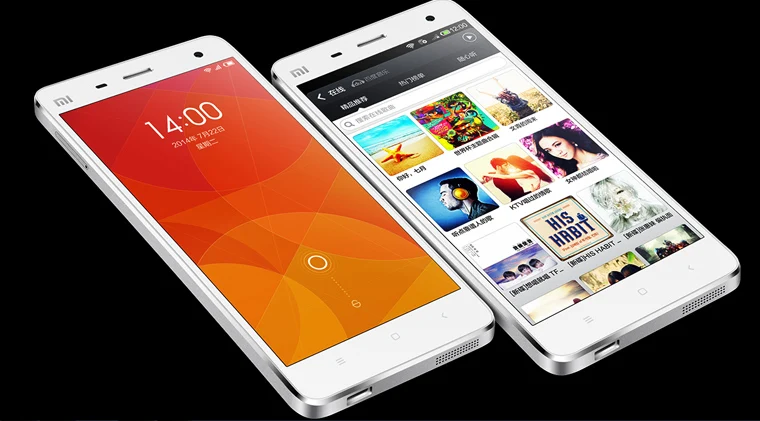
China's Xiaomi plans to flood the world with 2,000 stores within three years


Image result for xiaomi phone

  • Xiaomi Senior Vice President Wang Xiang says the company wants 2,000 new stores within the next three years
  • "You will see us in almost every country," Wang said
  • After some hiccups, things seem to be turning around for the company: On Friday, Xiaomi said it posted a record high with more than 23 million smartphone shipments in the second quarter
BEIJING, China — Chinese tech firm Xiaomi plans to flood the world with 2,000 new stores within the next three years, a company executive told CNBC.
Half of those shops will be opened overseas with partners and the other half will be owned and operated by Xiaomi in China, and it's all part of the company's big ambitions to keep growing abroad, said senior vice president Wang Xiang, who oversees the firm's global strategy. In the next few years, "we will definitely be a global player," he said.
"You will see us in almost every country," Wang projected.
Beijing-based Xiaomi started out selling low-cost smartphones and exploded as one of the world's leading vendors within a handful of years. It even set a Guinness World Record for selling the most number of phones ever in a single day — 2.12 million units.
Since then, the firm has added products, including smart fitness bands, smart scooters, smart air purifiers, and more, splashing out to more than 40 countries and regions. The brand, which primarily sells direct to customers via online channels, or via distribution partnerships, has become so popular in China that at times it's easy to forget that the start-up only launched in 2010.


  • Xiaomi Senior Vice President Wang Xiang says the company wants 2,000 new stores within the next three years
  • "You will see us in almost every country," Wang said
  • After some hiccups, things seem to be turning around for the company: On Friday, Xiaomi said it posted a record high with more than 23 million smartphone shipments in the second quarter
It's a company that's also taken a cue from Silicon Valley company culture. Xiaomi's young employees buzzed around headquarters on Monday, surrounded by tons of stuffed Mi bunnies — the firm's cute white rabbit icon — perched on shelves and desks. Walls were dotted with reprints of iconic works by artists including Vincent van Gogh and Camille Pissarro. One staffer traveled in the office via Xiaomi's own smart scooter, as people streamed in and out of the canteen chatting about work and weekend plans, and screens showed photos of members of the Mi soccer club.


Big global expansion plans

This year, Xiaomi has already expanded into countries including Russia, the United Arab Emirates and Egypt, and is even manufacturing devices locally in India and Indonesia. Next year, the company is looking to focus more on Southeast Asian nations such as the Philippines and in eastern Europe, Wang said.


And although Xiaomi's low-cost offerings — the RedMi 4A phone is 599 yuan ($88) in China — perhaps make more sense in developing markets, the company also wants to make inroads in places like western Europe.
Image result for the RedMi 4A phoneAside from building brand awareness abroad, Wang said Xiaomi has a peculiar problem with its affordably-priced phones and products. "If you buy a product from any shop with a low price, normally … your expectation is quality may not be good, but we want to prove you don't need to spend a lot of money to buy a high quality product," he said, deeming that "the most difficult challenge for us."
That's where the push to open more shops come in — "seeing is believing," Wang said. "You have to let the people try the product first." Brick-and-mortar stores may seem a departure from Xiaomi's e-commerce strategy, but the company says they've been a huge success in creating a seamless online-to-offline experience for customers.

Internet of things

Xiaomi also wants to get its popular portfolio of products to customers outside of China in hopes of leading the "internet of things," linking devices like smartphones to every day objects like televisions and coffee makers. Think lamps that shut down when you fall into a deep sleep or a rice cooker you can turn on before you get home. Xiaomi boasts it's paving the way as it already has 60 million devices connected to its online ecosystem.
To help with that, the firm last week announced it would cross-license patents with Nokia, a move that helps both companies develop new products. The deal gives the tech firms access to so-called standard essential patents — key ones that allow products to comply with an industry standard. Last year, Xiaomi inked a similar deal with Microsoft, buying up 1,500 patents.
The Nokia deal is a protective measure to "defend ourselves once we go into many, many more countries, according to Wang. "The key, actually, is to get more design freedom," he said. With "the patents we acquired, our engineers can design many, many more products more efficiently."
Despite the big international push, Xiaomi hasn't announced its revenues or the split between global and domestic sales. It is, after all, still a private company, and Wang declined to comment on any IPO plans. But the firm has been quick to tout its success in India, where sales hit $1 billion last year.

Bumpy road to the top

Xiaomi's exponential growth, though, has seen hiccups along the way. Supply chain issues have plagued the company — at first, Xiaomi wasn't able to ramp up production to meet customer demand.
But then, the firm's phone sales started slipping as it lost market share to competitors like Huawei and cheaper brands Oppo and Vivo — something industry analyst firms like Canalys have said happened before Xiaomi was able to find stronger growth with its other products.
On top of that, company executive Hugo Barra, who had been lured away from Silicon Valley, announced that he would leave the company and move back to the U.S. at the beginning of the year.
But it does seem things are turning around. On Friday, Xiaomi said it posted a record high with more than 23 million smartphone shipments in the second quarter of this year.
"Our recovery follows a year of setbacks that collectively signify the most challenging period in our company history," Xiaomi founder Lei Jun wrote in a letter to employees. But despite all of that, the firm is staying the course with big goals — to hit 100 billion yuan in sales this year, and to ship 100 million smartphones next year.
By Sophia Yan

Source: https://goo.gl/YhGDwX

Also Read :How to Buy Into Xiaomi Without Buying Its Stock. /   https://goo.gl/dXEPY5


Sunday, March 19, 2017

The Week Ahead: All Eyes on Technology's Momentum

The Washington 'swamp' keeps getting murkier, but tech stocks are cutting through the gloom. Here's what to look for in coming days.

 
The Trump administration's looming health reform fiasco, draconian budget blueprint, and foreign affairs missteps are roiling the markets, but one sector appears to have seized sustainable momentum: technology.
Here's a look at the forces driving tech higher and the profitable opportunities emerging among tech companies of all sizes, regardless of the market's excessive valuations and myriad political risks.
The stock market closed on Friday with a gain of 0.2% for the week, although it didn't top its record high from the start of March. The clear outperformer was the tech-heavy Nasdaq, which closed +0.7%, rising near its early-March high to hover near another record close. The Nasdaq is now up 9.6% year to date, versus the S&P 500's (SPY) YTD gain of 6.2%.
One sector that hasn't fared well over the past week is health care. The Republican alternative to Obamacare, inevitably dubbed "Trumpcare," is a toxic stew of half-measures that no one finds palatable.
The consensus in both parties is that the Obamacare replacement bill is dead on arrival, as an increasing number of GOP senators indicate they will vote "no." The political stalemate over health care has dampened enthusiasm for health stocks, with the benchmark Health Care Select Sector SPDR Fund (XLV) falling 1.08% over the past five days.
Trump also has unnerved global investors by alienating America's key allies of Britain and Germany.
The president continues to infuriate the Brits by repeating groundless claims that Britain's intelligence services spied on him at the behest of Obama. Meanwhile, at a White House meeting on Friday, Trump's anti-EU stance was on full display as he treated German Chancellor Angela Merkel with insulting disdain to the point where he refused to shake her hand.
In case anyone has forgotten, Britain is America's most important strategic partner and Germany is the largest economy in Europe.
But through it all, technology paints a rosy investment picture. One tailwind is Trump's promise to make it easier for tech firms to repatriate cash hoards that are parked overseas. Tech companies are likely to use this cash to fund merger and acquisition activity, to fuel organic growth and innovation.
In a sign of the heightened M&A to come, Intel (INTCannounced on Monday that it was making a big bet on self-driving vehicles by acquiring Mobileye (MBLY) for $15.30 billion in cash, paying a 34% premium to Mobileye's share price from the previous session. Mobileye is a small Israeli company that creates vision systems for cars and trucks.
In the week ahead, keep an eye on Silicon Valley giants with deep pockets. They increasingly need to find new avenues of growth by gobbling up smaller, entrepreneurial firms in such hot areas as autonomous cars, the Internet of Things, and the cloud.
Indeed, largely driven by cloud growth, Oracle (ORCL) on Wednesday delivered an earnings beat that sent shares rocketing higher. The tech giant's third-quarter 2017 earnings per share of 63 cents and revenue of $9.27 billion handily exceeded the consensus estimate of 57 cents and $9.24 billion, respectively.
Another positive for technology is the expected increase this year in IT spending, as cash-rich corporations make deferred upgrades. According to research firm Gartner, worldwide IT spending is projected to total $3.5 trillion in 2017, a year-over-year increase of 2.7%. Historically, IT spending is positively correlated with stock performance. One fast-growing segment is cyber security, as hacking incidents continue to mount.
The key takeaway: ignore the dreariness of today's politics and focus on the fundamentals. And right now, several trends strongly favor technology.
Notable tech company earnings on the calendar in the week ahead: Accenture (ACN) and Upland Software (UPLD) (Thursday). Economic reports: Existing Home Sales (Wednesday); Jobless Claims, New Home Sales, and Bloomberg Consumer Comfort Index (Thursday); Durable Goods Orders and Baker-Hughes (BHI) rig count (Friday).
You would probably probably think "accountant" or "average cubicle guy." Actually, he was a lawyer until he unlocked this secret that made him $5 million. How does he do it? We'll warn you... it's about as exciting as a ham sandwich. But it's turning regular readers into six-figure income machines. Click here now for all the details.
By John Persinos

Thursday, March 9, 2017

These are the 5 internet stocks you should buy right now, according to Citi

Facebook ranked as No. 1 internet stock by bank, which ranks only Twitter as a sell among 16 companies focused on web
Analysts at Citigroup released a ranking of internet stocks Wednesday that investors may want to consider if they’re looking to make money off companies underpinning the vast web.The brokerage has 16 internet stocks in its coverage area, ranging from Facebook Inc. FB, -0.09%   , its top pick, to Twitter Inc. TWTR, -0.13%   , the only stock it rates as a sell.
Many major tech stocks are not included because internet is not the companies’ main focus. For instance, Apple Inc. AAPL, -0.23%   is considered a hardware company even though it continues to expand its online software and services category.
Citi breaks its coverage of these stocks into three main areas: internet media, e-commerce and online travel.
Here are Citi’s top five internet stock picks in order:


Facebook: The social media giant has “significant opportunity in video, Instagram, messaging” and other areas of business, according to Citi. Growth is expected to slow in the near term as Facebook reduces ad load, but that is widely expected. The deceleration is viewed as just a hiccup in the trajectory of an otherwise high-growth company.
Facebook is also still in early stages of monetizing Instagram, its popular photo-sharing app, and messaging app WhatsApp. Last quarter, Facebook reported a 51% increase in revenue to $8.81 billion as it continued to grow mobile users and sell mobile ads. Last summer, it launched Instagram Stories, a feature that mirrors a popular offering from Snapchat, whose parent company, Snap Inc.SNAP, -0.44%  , recently went public in the largest U.S. tech IPO since Facebook’s.
Citi has a buy rating and $165 12-month price target on the stock. Shares of Facebook gained 0.3% to $137.69 on Wednesday and have increased nearly 16% in the past three months and 30% in the past year, outperforming the S&P 500 index SPX, +0.08%  , which is up 5.5% in the past three months and 20% in the past year.
Alphabet: The Google parent has to tackle increased traffic acquisition costs and decelerating search revenue as it faces new competition in search from companies such as Facebook and Amazon.com Inc. But the company’s mobile search and cloud businesses, as well as YouTube, which will soon launch a subscription-based streaming TV service, are viewed as attractive opportunities overshadowing the problem areas.
Last quarter, Google’s profit margins slipped to 76% from 78% in the year-earlier period. However Citi said “focusing on margin compression misses the big picture.”
The brokerage ranks Alphabet Inc. GOOGL, +0.49% GOOG, +0.40%  a buy with a $985 price target on the stock. Shares of Google have gained 7.5% in the past three months and 20% in the past year, virtually in line with the S&P 500. They increased 0.5% to $855.76 on Wednesday.
Amazon: Amazon’s AMZN, +0.04%  AWS cloud business, dominance of e-commerce, growing influence over the logistics that have long been controlled by United Parcel Service Inc. UPS, +0.16%   and FedEx Corp. FDX, -0.63%   , and its fast-growing media and Prime subscription businesses are all seen as major positives that may propel the stock.
While investments the company makes in original content and other areas related to its expansion, as well as price cuts tied to AWS, may pressure margins near-term, Citi said top-line trends at AWS and retail remain strong. “Expect long-term payoff from these investments, and believe there is potential for material improvement in margins and EPS over the long-term,” the bank said.
Citi has a buy rating and $960 target on Amazon stock. Shares of Amazon gained 0.5% to $850.58 on Wednesday and have increased 11% in the past three months and nearly 52% in the past year, outperforming the S&P 500.
Priceline: The travel bookings site is the “clear market leader” in hotel bookings, which Citi said is “the most attractive online travel sector.” Last quarter, Priceline Group Inc.’s PCLN, +0.20%  revenue jumped more than 17% year-over-year, which it attributed to strong growth in hotel revenue. The company did provide an earnings per share outlook for the current quarter that fell short of expectations, but investors seemed to have shrugged that off as Priceline has a history of under-promising and over-delivering.

Will Snap reinvigorate the IPO market?

Snap went public in the largest tech IPO in the U.S. since Alibaba. Yet some investors question the company's long-term health and effect on the IPO market.
The company’s ability to diversify beyond the trip-planning platform, which mirrors that of rivals such as Expedia Inc. EXPE, +0.14%  , is also seen as a noteworthy competitive edge. Citi said the company has a positive record of executing on new initiatives, and may, therefore have success with some of its newer business lines, such as virtual reality and business travel. Last year, Priceline launched a mobile app called Booking Experiences that helps travelers plan their trips with previews of destinations and pop-up notifications providing information when travelers walk past attractions. Augmented reality will enable the company to do this more seamlessly, while virtual reality could help potential travelers explore places before they book.
Citi has a buy rating and $1,880 price target on the stock. Shares of Priceline gained 0.7% to $1,748.29 in afternoon trade and have climbed 13% in the past three months and more than 36% in the past year, outperforming the S&P 500.

Hey guys, simply click on this link https://goo.gl/tivXbO to get $5 off when you create an #app with #AppyPie.
EBay: This is an interesting pick because of the intense competition it faces against much stronger and larger rival Amazon. However, Citi touts eBay Inc.’sEBAY, -0.42%  “modestly improving growth,” potential for “significant capital returns” and value stemming from strategic mergers and acquisitions as reasons why it’s a fairly-valued stock that’s worth buying.
In January, eBay posted a 3.1% increase in revenue for the key holiday-shopping period, marking its fourth straight quarter of top-line growth. The company may not be as big as Amazon, but it is well-positioned for the continued shift to online and mobile shopping, which is increasingly weighing on traditional brick-and-mortar retail companies.
It’s also a much cheaper stock. Citi has a buy rating and $36 price target on eBay. Shares of the online marketplace fell 0.3% to $33.37 on Wednesday and have gained 13.4% in the past three months and 38.6% in the past year, outperforming the S&P 500.
Yahoo Inc. YHOO, -0.09%   and GrubHub Inc. GRUB, +0.60%   are the only two stocks in Citi’s coverage of internet stocks with buy ratings that did not make its top-five list. Verizon Communications Inc.’s VZ, +0.24%  planned purchase of Yahoo will provide cash to shareholders and remove some of the complexity in the business, said Citi, which rates Yahoo a buy with a $49 target. GrubHub is investing in a number of near-term initiatives that could support long-term growth, said the analysts, which have a buy rating and $44 target on the stock.
By Jennifer Booton

Source: http://www.marketwatch.com/story/these-are-the-5-internet-stocks-you-should-buy-right-now-according-to-citi-2017-03-08