Showing posts with label investing in Bitcoin. Show all posts

Sunday, November 12, 2017

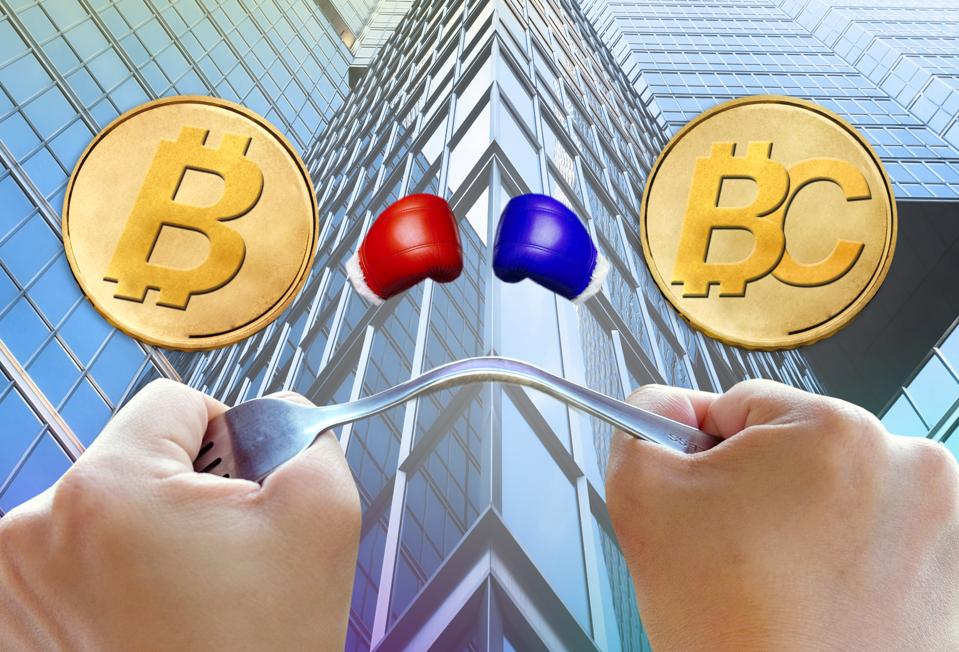
Bitcoin vs. Bitcoin Cash: What's the Difference?


Image result for Bitcoin CashSince its inception, there have been questions surrounding Bitcoin’s ability to scale effectively. Bitcoin is a cryptocurrency that exists within network of computers, within the blockchain. This is revolutionary ledger-recording technology. It makes ledgers far more difficult to manipulate for a couple reasons: The reality of what has transpired is verified by majority rule, not by an individual actor. And this network is decentralized; it exists on computers all over the world.
The problem with this technology is that it’s slow. Like, really slow, especially in comparison to banks that deal with credit card transactions. Visa processes 150 million transactions per day, averaging out to roughly 1,700 transactions per second. And their capability far surpasses that, at 24,000 transactions per second.
How many transactions can the Bitcoin network process per second? Seven. Transactions take about 10 minutes to process. And as the network of Bitcoin users grows, waiting times will get longer, because there are more transactions to process without a change in the underlying technology that processes them.
The latest debates around Bitcoin’s technology have been concerned with this central problem of scaling and increasing the speed of the transaction verification process. There are two major solutions to this problem, either to make the amount of data that need to be verified in each block smaller, making transactions faster and cheaper or to make the blocks of data bigger, so that more information can be processed at one time.

The Difference Between Bitcoin and Bitcoin Cash

In mid July 2017, mining pools and companies representing roughly 80-90% of Bitcoin computing power voted to incorporate a technology known as a segregated witness, called SegWit2x. SegWit2x makes the amount of data that needs to be verified in each block smaller, by removing signature data from the block of data that needs to be processed in each transaction, and having it attached in an extended block. Signature data has been estimated to account for up to 65% of data processed in each block, so this is not an insignificant technological shift. Talk of doubling the size of blocks from 1mb to 2mb in November has ramped up, and is expected.fThis would also go some ways in improving Bitcoin’s scalability. In mid-October, Bitcoin scientists from Bitcoin Unlimited revealed they had mined the world's first 1GB block, 1,000 times bigger than the normal size.

Related image

Bitcoin Cash is a different story. Bitcoin Cash was started by Bitcoin miners and developers equally concerned with the future of the cryptocurrency, and its ability to scale effectively. These individuals had their reservations about the adoption of a segregated witness technology, though. They felt as though SegWit2x did not address the fundamental problem of scalability in a meaningful way, nor did it follow the roadmap initially outlined by Satoshi Nakamoto, the anonymous party that first proposed the blockchain technology behind cryptocurrency. Furthermore, the process of introducing SegWit2x as the road forward was anything but transparent, and there were concerns that its introduction undermined the decentralization and democratization of the currency.
On August 1st, some miners and developers initiated what is known as a hard fork, effectively creating a new currency: Bitcoin Cash. Bitcoin Cash has implemented an increased block size of 8mb, to accelerate the verification process, with an adjustable level of difficulty to ensure the chain’s survival and transaction verification speed, regardless of the number of miners supporting it. This has raised concerns about the security of Bitcoin Cash.
(For more on cryptocurrency, read: Does Crypto Have Intrinsic Value? It Depends)


The Future of Cryptocurrency

This development could mean any number of things for the future of cryptocurrency. The situation is very fluid, and market valuations are both constantly calibrating and volatile. It’s going to be difficult to get a clear picture until Bitcoin Cash has been running for a little while (or fails), and until Bitcoin implements its segregated witness technology later this month, and then doubles the size of its blocks three months later.
In a blog post earlier this week titled “The Crypto Currency Debate: Future of Money or Speculative Hype?”, “dean of valuation” and NYU Stern Professor Aswath Damordan said that the future of cryptocurrency as a currency, as opposed to a speculative asset as it is so often treated, depends on cryptocurrency developers thinking of their technology as a “transaction medium and acting accordingly”. Both of these moves seem to be aimed at improving cryptocurrency technology as a medium of exchange.
Improving cryptocurrency as a transaction medium will depend on maintaining the high level of security that Bitcoin has always ensured, while also improving transaction speeds. Bitcoin will continue to be highly secure, but how much its transaction speeds will improve is unclear. Bitcoin Cash, once its difficulty has adjusted, could have transactions processing in two minutes and 30 seconds. The security of the Bitcoin Cash blockchain, though, is unclear.
It will also depend on miners’ and users’ vision for the currency. If Bitcoin really does undermine the decentralized nature of the network, and the democratic possibilities of the blockchain technology, people may look elsewhere for a cryptocurrency with more exciting potential. (For more insights on how the market has changed since the fork, read: What's Bitcoin Cash and Where the Heck Did it Come From?)


Source: 
https://goo.gl/SCNvuZ

Tuesday, August 8, 2017

Bitcoin's explosive gains could spell good news for stocks

FILE PHOTO - A trader works on the floor of the New York Stock Exchange shortly after the opening bell in New York, U.S., June 27, 2017. REUTERS/Lucas Jackson

It has gained about 80% over the past month, shaking off fears that a fork in the cryptocurrency would cause its price to plummet.
These kinds of astronomical gains in bitcoin, it turns out, are correlated with a strong showing by stocks too, according to Nautilus Investment Research. 
Image result for bitcoin surgeTo be more specific, the firm says that of the 18 previous instances when bitcoin returned at least 30% in a month, the S&P 500 was higher 15 times two months later and 17 times three months out, averaging gains of 3.61% and 4.66%, respectively.
What explains this? Nautilus doesn't offer a reason, but it does note that it could just be that bitcoin is a "barometer for animal spirits in the markets."
In other words, when traders are going nuts about a highly-speculative investment like bitcoin, that same risk-loving attitude might turn up among the folks who trade stocks. What we can't know from this is whether one affects the other, or if there's something else driving strong demand for both. 
Though Nautilus only has 18 points of reference, it's worth noting that these go all the way back to 2010, so the backdrop for the rallies — the strength of the economy, investor sentiment, and Trump — haven't all been the same. Of course, bitcoin hasn't been around that long so we don't know how this correlation will hold up in the long-term.
Bitcoin has had a blazing start to 2017. Through the first seven-plus months of the year it has gained 257%.
8 7 17 stocks after bitcoin COTD
(Nautilus Investment Research) 

Monday, May 22, 2017

If you bought $100 of bitcoin 7 years ago, you'd be sitting on $75 million now

Store with Bitcoin sign
Philippe Lopez | AFP | Getty Images

  • The price of bitcoin hit a fresh record high on Monday nearing $2,200.
  • Monday also marks the seventh anniversary of Bitcoin Pizza Day, which is widely considered to be the first transaction using the cryptocurrency.
  • If you bought $100 worth of bitcoin on May 22, 2010, you'd be sitting on around $72.9 million today.


On May 22, 2010, Hanyecz asked a fellow enthusiast on a bitcoin forum to accept 10,000 bitcoin for two Papa John's Pizzas. At the time, Hanyecz believed that the coins he had "mined" on his computer were worth around 0.003 cents each.
Bitcoin mining involves solving a complex mathematical solution with the miner being rewarded in bitcoin. This is how Hanyecz got his initial coins.
The cryptocurrency has many doubters as it continues to be associated with criminal activity, but it has still seen a stunning rally. Here are two facts, on Bitcoin Pizza Day, however, that highlight this:
  • While being worth $30 at the time, Hanyecz pizzas would now cost $22.5 million at current bitcoin prices.
  • If you bought $100 of bitcoin at the 0.003 cent price on May 22, 2010, you'd now be sitting on around $75 million.
A number of factors have been driving the rally:
  • Recently passed legislation in Japan that allows retailers to start accepting bitcoin as a legal currency has boosted trading in yen, which now accounts for over 40 percent of all bitcoin trade
  • Political uncertainty globally has driven demand for bitcoin as a safe haven asset
  • debate within the bitcoin community about the future of the underlying technology behind bitcoin known as the blockchain has been taking place. There was fear at one point this could lead to the creation of two separate cryptocurrencies but those worries have largely subsided with an alternative, more palatable option now being put forward.
For an in-depth look at the factors driving bitcoin, click here.
Bitcoin has rallied over 120 percent year to-date.
By Arjun Kharpal

Source: https://goo.gl/3Bcbxu

Monday, March 13, 2017

Bitcoin Crash Creates Golden Opportunity

Image result for bitcoin crash

GPL FSM ASM AGI
I’ve been wrong about my timing of the silver and gold trade twice now. Once to my followers in Momentum Trader and another time in a much more public way, on Bloomberg the end of last year. My fundamental investment thesis surrounding gold hasn’t been wrong just my timing. And now, with gold prices bouncing off $1,200 and last week’s Bitcoin debacle I’m taking another stab at it.
You could argue that Bitcoin and gold are both alternatives to global fiat currencies. Neither has a central bank which governs them nor do they pay interest. They are both a store of value and can be held anonymously. Gold and silver have a tendency to track with each other so I’m including it when I look for stock ideas.The Bitcoin debacle I’m referring to is last week’s decision by the SEC to reject the Winklevoss Twins’ proposal for a Bitcoin ETF. An ETF would have helped to legitimize the cryptocurrency and expose it to an entire new market of potential investors. The SEC’s decision was based on the unregulated nature of the Bitcoin market itself. With no way of overseeing the underlying investment, there was no way the SEC could give it a stamp of approval.
Of course there’s one giant difference between the two. Gold has been a historic store of value for ages and something you can physically possess. Bitcoin is a digital currency that was created from nothing a few years ago. There is still a huge amount of skepticism surrounding Bitcoin and other cryptocurrencies. A rash of high profile hacks, essentially digital bank robberies, have loomed like a cloud over Bitcoin for years. This ETF would have been something like a Bitcoin coming out party.
However, that was not the case and Bitcoin’s value plunged in Friday trading. Nearly simultaneous there was a huge rally in gold prices with the metal bouncing from just under $1,200 an ounce, an obvious psychological support level. Gold still does have an inverse relationship with yields. As interest rates rise you tend to see pressure on gold prices. We all know the Fed is going to hike rates next week. That is a huge negative on gold pricing. But if the metal can rally even in the face of that hike, then there could be overpowering fundamentals at play.
One way to play a potential continuation of silver and gold’s move higher is to look at the silver and gold miners. A lot of these companies got lean and mean in order to survive the plummet in prices and have emerged with much stronger balance sheets. They have found ways to minimize their acquisition costs and streamline their mining process. I’ve put together a list here of gold stocks that are Zacks Rank #1 (Strong Buy) and Zacks Rank #2 (Buy) stocks for you to investigate a little further.
Alamos Gold (AGI - Free Report)
Alamos Gold Inc., together with its subsidiaries, engages in the acquisition, exploration, development, and extraction of gold deposits in North America. It also explores for silver and precious metals. The company holds interests in the Young-Davidson mine, which includes contiguous mineral leases and claims totaling 11,000 acres located in Northern Ontario, Canada; the Mulatos mine located within the Salamandra Concessions in the Sierra Madre Occidental mountain range in the east-central portion of the State of Sonora, Mexico; and the El Chanate mine that comprises 22 mineral concessions covering 4,618 hectares situated in the State of Sonora, Mexico. It also holds interests in a portfolio of development stage projects in Mexico, Turkey, Canada, and the United States.
Avino Silver (ASM - Free Report)
Avino Silver & Gold Mines Ltd. engages in the production and sale of silver, gold, and copper bulk concentrates; and the exploration, evaluation, and acquisition of mineral properties. The company owns 42 mineral claims and leases 4 mineral claims in the state of Durango, Mexico. It also holds 100% interests in the Bralorne mine located in the Lillooet mining division, British Columbia, Canada; and the Eagle property located in the Mayo mining division of Yukon, Canada.
Fortuna Silver (FSM - Free Report)
Fortuna Silver Mines Inc. engages in the exploration, extraction, and processing of mineral properties in Latin America. The company explores for silver, gold, lead, and zinc deposits. It holds interests in the Caylloma mine located in the Arequipa Department in southern Peru; and the San Jose mine located in the State of Oaxaca in southern Mexico. 
Great Panther Silver (GPL - Free Report)
Great Panther Silver Limited, a silver mining and exploration company, engages in the mining of mineral properties in Mexico. It explores for silver, gold, lead, and zinc. The company holds interests in the Topia Mine and Guanajuato Mine Complex properties. It also holds mineral property interests in the exploration stage, such as the El Horcon and Santa Rosa projects located in Mexico, and Coricancha Mine Complex located in the Central Andes of Peru.
Bottom Line
I think Bitcoin blowing up here could benefit gold and silver over the short run. That being said, a great way to play the rise in these metals could be to look at the silver and gold miners. This is a short list to start researching the best one to buy.

Saturday, April 18, 2015

VC Investing in Bitcoin Rises to the Fastest Pace Yet


Bitcoin-chartThe amount of money venture capitalists areinvesting in Bitcoincontinues to accelerate, demonstrating their faith in the digital currency's potential.
In the first quarter of 2015, venture capitalists poured $229 million intoBitcoin startups. That was more than double the $144 million invested inBitcoin in Q4 2014.
And it's equal to two-thirds of the $349 million of venture capital invested in Bitcoin in all of 2014.
It puts VC investing in Bitcoin on track to raise $916 million this year. That's more than 2.5 times the 2014 total.
The rate of Bitcoin investment also mirrors very closely the progress of Internet-based startups back in the mid-1990s.
What's most remarkable about the accelerating pace of VC investing in Bitcoin companies is that it has occurred despite a series of setbacks for the cryptocurrency.

Negative News Can't Slow Down Investing in Bitcoin

Remember, it was in February of 2014 that the Mt. Gox Bitcoin exchange collapsed, losing 750,000 customer Bitcoins worth about $350 million at the time.
Other issues that have plagued Bitcoin include:
  • Unfavorable treatment by several governments, particularly China and Russia.
  • Scandals involving several top members of the Bitcoin Foundation, the entity created to maintain the Bitcoin software and promoting the cryptocurrency.
  • The persistence of websites that use Bitcoin as a tool for selling illegal drugs.
  • The plunge in the price of Bitcoin from $940 in January of 2014 to $177 in January of 2015.
Yet none of that has deterred the venture capitalists.
They recognize the power of a monetary mechanism that can transfer money almost instantly and at a very low cost between any two parties anywhere in the world. The VC crowd also recognizes the power of the Bitcoin blockchain, the technology that underpins the digital currency.
Image result for bitcoinIn addition to verifying Bitcoin transactions, the blockchain can store data. That means the blockchain can be used to confirm ownership of property such as housing or autos, as well as for such applications as voting, trademarks, proof of authorship, and more.
The first quarter also revealed another trend. And now venture capitalists are concentrating on the most promising Bitcoin startups.
For example, Coinbase, a Bitcoin wallet and payment company, picked up an additional $75 million of funding in January. Coinbase has now raised a total of $106 million.
And another intriguing company set a record for investing in Bitcoin last month. It raised $116 million in a single round.
Some of the biggest names in venture capital are backing this secretive Bitcoin startup – take a look…

Will This Bitcoin Startup Trigger Mass Adoption?

Image result for 21IncCalled 21 Inc., this San Francisco-based company has kept its exact plans mostly under wraps. But it has attracted some very impressive investors.
Not surprisingly, Andreessen Horowitz tops the list. Andreessen Horowitz is a leader in VC investing in Bitcoin.
But the list also includes RRE Ventures, which has invested in such companies as Bitly, SailThru, Kik, Buzzfeed, Payfone, and Chain. Other big VC names include Chinese private equity firm Yuan Capital and Qualcomm Inc.'s (NasdaqQCOM) venture capital unit.
Several tech CEOs and founders also joined the round, such as PayPal co-founders Peter Thiel and Max Levchin, Dropbox Inc. CEO Drew Houston, Expedia Inc. (Nasdaq: EXPE) CEO Dara Khosrowshahi, and Zynga Inc. (Nasdaq: ZNGA) cofounder Mark Pincus.
The cofounders of 21 Inc., Matthew Pauker and Balaji S. Srinivasan, have dropped a few tantalizing hints.